


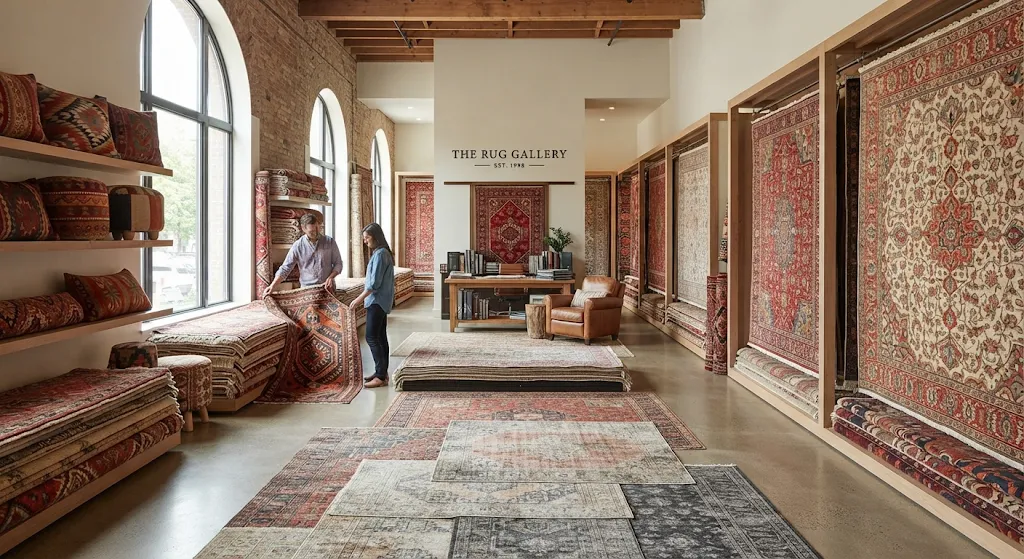
To start a rug business from scratch, pick a rug niche, research your buyers, write a simple plan, register the business, find reliable suppliers, buy a small first batch of stock, choose where you will sell, create honest listings, set your shipping and return rules, and then work on getting your first customers. You can do all ten with limited money if you keep the first order small and test before you scale.
Here is how each step works in practice, written for someone starting without a family name or an existing shop.
Step 1: Choose a Rug Niche
“Rugs” is too broad to build a business around. Buyers searching for a rug usually want something specific, and a focused shop is easier to market than a general one. Common starting points include:
- Machine-made area rugs at accessible prices
- Hand-knotted or handmade rugs
- Vintage and antique rugs
- Custom sizes and made-to-order designs
- Outdoor, washable, or kid-friendly rugs
- Rugs for a specific audience, such as interior designers or hospitality buyers
Pick a niche you can explain in one sentence. Your experience, your access to suppliers, and the price range you are comfortable carrying should all point to the same answer.
Step 2: Research Your Buyers and Competitors
Before you spend on stock, find out who is already selling what you want to sell. Look at local rug stores, online specialists, and large retailers. Note their price ranges, the sizes and styles they carry, and what customers complain about in reviews.
Then ask who buys in your niche. A homeowner replacing a living room rug, a designer sourcing for a client, and a business furnishing a lobby all shop differently. Knowing your main buyer shapes everything else, from the rugs you stock to the way you describe them.
Step 3: Write a Simple Business Plan
You do not need a 40-page document. A one- or two-page plan is enough if it answers these questions:
- What do you sell, and to whom?
- What will you charge, and what does each rug cost you?
- How will you sell: online, in a showroom, or both?
- What are your startup and monthly costs?
- How many rugs do you need to sell each month to break even?
If you are unsure about the money side, read our breakdown of rug business startup costs before you finalize your numbers.
Step 4: Pick a Business Structure and Register
How you set up the business affects your taxes and your personal risk. The U.S. Small Business Administration explains each option in its guide to choosing a business structure. In short:
- A sole proprietorship is the simplest, but it does not create a separate business entity, so you can be personally liable for business debts.
- An LLC generally protects owners from personal liability for business debts and lawsuits, with a bit more paperwork.
- A corporation offers the strongest protection but costs more to form and maintain.
If you plan to trade under a name other than your own, you may also need to register a DBA, which is handled at the state, county, or city level. Requirements vary by location, so check with your local authority. For anything with legal or tax consequences, talk to an accountant or attorney.
Step 5: Handle Your EIN, Bank Account, and Licenses
Open a separate business bank account so your sales and expenses stay clean from day one. Many owners also apply for a free federal Employer Identification Number from the IRS, which is useful for banking and state tax purposes even when it is not required.
You will likely need local and state paperwork too, such as a business license and a seller’s permit that lets you collect sales tax. Rules differ by state and city, so confirm what applies to you before you sell your first rug. The SBA’s page on applying for licenses and permits is a good place to see how federal, state, and local requirements fit together.
Step 6: Find Reliable Rug Suppliers
Your supplier decides your quality, your margins, and your reputation. Common ways to source rugs include:
- Domestic wholesalers and distributors
- Importers who sell to retailers
- Direct relationships with workshops and weavers
- Trade shows and trade markets
- Estate sales and auctions, if you plan to sell vintage or antique pieces
Before you commit, ask each supplier these questions:
- What is the minimum order?
- How long does delivery take?
- Can I order samples first?
- What are the return and damage policies?
- Can you document materials and origin for each rug?
- Do you offer consistent photos and size details?
Start with a small test order. A good supplier will not mind. If you are building a wholesale or importer-facing business, our guide to wholesale B2B leads covers how those buyers are found. If you import directly, work with a licensed customs broker on entry requirements, since those rules are separate from store licensing.
Step 7: Decide Where You Will Sell
You have three main routes, and many rug sellers combine them:
- Your own website. You control the brand and the customer relationship, but you must earn your own traffic.
- A marketplace. You get built-in visitors, but you pay fees and compete directly with other sellers.
- A physical showroom or pop-up. Buyers can touch the product, which helps with high-ticket sales, but fixed costs are higher.
Our comparison of website vs marketplace explains how the economics differ. For most new sellers, a simple website plus one marketplace is a reasonable test.
Step 8: Create Honest, Detailed Listings
Rugs are hard to sell online because the buyer cannot see texture or true color. Good listings reduce returns and build trust. Include:
- Clear photos from several angles, plus a close-up of the weave
- Exact size and pile height
- Material, construction type, and country of origin, only when you can verify them
- Care instructions
- Honest notes on wear, repairs, or color variation for vintage rugs
Organize your catalog so buyers can browse by size, style, and material. Our explainer on rug categories helps here, and a good set of product descriptions makes each listing easier to find and easier to trust.
Never guess at a rug’s age, origin, or materials. A wrong claim can lead to refunds and angry reviews, and in some cases legal trouble.
Step 9: Set Shipping and Return Policies Before You Launch
Rugs are bulky, and shipping them costs real money. Decide in advance:
- Which carriers you will use and how you will pack rolled rugs
- Whether you offer free shipping, flat rates, or calculated rates
- How long customers have to return a rug and who pays for return shipping
- What you do when a rug arrives damaged
Writing these down early protects your margin and gives buyers confidence to order a high-ticket item.
Step 10: Get Your First Customers
You do not need a big budget to start. Focus on a few channels that fit your niche:
- Local visibility. If you have a showroom or serve a local area, learn how to rank in Google Maps.
- Reviews. Ask every happy buyer for feedback, and see how to get more Google reviews.
- Designers and trade buyers. One designer can bring repeat orders, so it pays to learn how to work with designers.
- Social and content. Room photos, care tips, and behind-the-scenes posts show off your taste.
For a wider list of tactics, see our guide to getting more rug store customers.
Common Mistakes New Rug Sellers Make
- Buying too much stock before testing demand
- Ignoring shipping costs when setting prices
- Writing vague or inflated product descriptions
- Launching without a clear return policy
- Skipping local licenses and tax registration
- Trying to sell every type of rug to everyone
Frequently Asked Questions
Can I start a rug business with no experience?
Yes, but plan to learn quickly. Spend time with suppliers, study how rugs are made and graded, and start with a narrow range you can describe confidently. Buyers pay for honest expertise, so be careful never to claim knowledge you do not have.
Do I need a physical store to sell rugs?
No. Many rug sellers start online or through marketplaces, then add a showroom later. A physical space helps with high-ticket sales, since buyers like to see a rug in person, but it adds rent and staffing costs.
How do I find rug suppliers?
Start with wholesalers, importers, trade shows, and direct contacts with workshops. Ask for samples, written terms, and documentation for materials and origin. Place a small first order to check quality and delivery before you commit to more.
How long does it take to start a rug business?
It depends on your setup. Registering the business, choosing suppliers, and building a site can each take weeks, and sourcing stock can take longer. There is no standard timeline, so build your own schedule from your supplier lead times.
Is a rug business profitable?
It can be, but profit depends on your margins, your shipping and return costs, and how well you sell. Work out your cost per rug and your break-even point before you invest heavily in stock.
Final Thoughts
Learning how to start a rug business comes down to a series of small decisions made in a sensible order: niche, plan, structure, suppliers, listings, policies, then customers. Keep the first order small, write down your numbers, and let real sales tell you what to buy next. Most of the early progress comes from learning what your buyers actually want.