


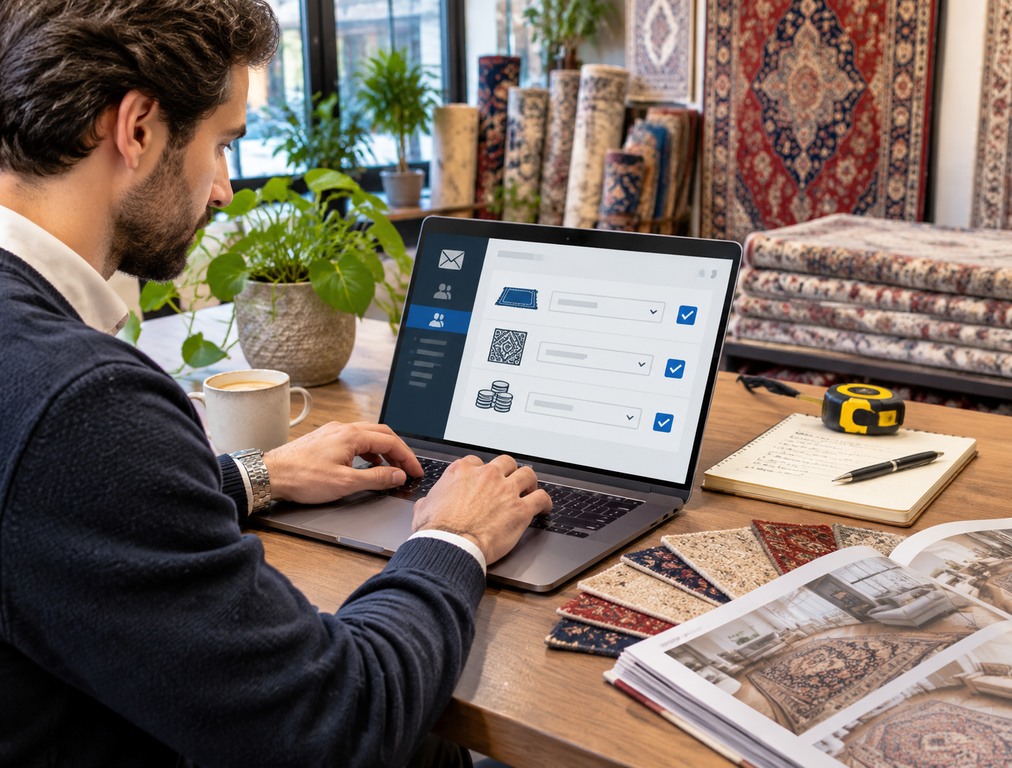
Sending the same promotional email to every subscriber is one of the easiest ways for a rug retailer to waste an otherwise valuable marketing opportunity. A customer searching for a large handmade Persian rug may have completely different preferences from someone looking for an affordable contemporary runner or a small rug for a bedroom. If both customers receive identical product recommendations, discounts and promotional messages, the emails may not reflect what either person actually wants. We can solve this problem through rug email segmentation, which allows us to organise subscribers according to their product interests, preferred dimensions, design preferences, purchasing behaviour and budget.
For rug retailers, email segmentation is particularly useful because buying a rug often involves several decisions. Customers compare dimensions, colours, materials, patterns, construction methods and prices before choosing a product. Some shoppers already know exactly what they need, while others are still exploring different collections and looking for inspiration. By collecting useful preference information and connecting it with website activity, we can send emails that reflect each subscriber’s actual shopping journey instead of relying on generic promotional campaigns.
Why Email Segmentation Matters for Rug Retailers
A large email list does not automatically represent a valuable marketing audience. What matters is whether the subscribers receive information that matches their interests and whether the campaigns encourage meaningful actions. When we send the same collection announcement to everyone, customers may repeatedly see products that are outside their preferred size, design or price range. Over time, irrelevant messaging can reduce engagement and encourage people to unsubscribe.
Email segmentation allows us to make better use of the information already available through our ecommerce website, CRM and email marketing platform. We can identify customers who prefer Persian rugs, subscribers who regularly browse modern designs, previous buyers interested in complementary products, and showroom prospects who have requested information about particular collections. Mailchimp’s ecommerce segmentation documentation, for example, supports grouping contacts according to purchase activity, products purchased, order value, cart activity and checkout behaviour. (Mailchimp ecommerce segmentation)
Start by Collecting Useful Customer Preferences
Before creating complicated email segments, we need reliable information about what subscribers actually want. We can collect this information through newsletter signup forms, preference centres, product browsing behaviour, showroom enquiries and post-purchase surveys. Rather than asking customers to complete a lengthy questionnaire, we can collect a few practical preferences that help us understand their rug requirements.
For example, a signup form might ask whether someone is primarily interested in living room rugs, bedroom rugs, runners, handmade rugs or contemporary designs. We can also allow subscribers to select preferred dimensions or approximate price ranges. These answers provide valuable first-party preference information because customers have directly communicated what they are looking for instead of requiring us to guess from limited browsing activity.
Segment Subscribers by Preferred Rug Size
Size is one of the most useful starting points for rug email segmentation because customers often search according to the dimensions of their rooms and furniture arrangements. Someone looking for an 8×10 rug may not find a newsletter dominated by small 3×5 rugs relevant, even when both products belong to the same collection. We can therefore organise subscribers into practical size-based groups, such as small rugs, medium area rugs, large area rugs, oversized rugs, runners and round rugs.
We should also allow for customers whose requirements are not yet fixed. A subscriber may initially browse 8×10 rugs but later discover that a 9×12 rug works better for the room. Instead of treating every browsing action as a permanent preference, we can update segments as customers interact with new products and collections. This gives us a more accurate picture of current shopping interests and helps prevent outdated recommendations from dominating future campaigns.
Organise Email Subscribers by Rug Style
Style-based segmentation helps us send product recommendations that reflect the designs customers are most likely to appreciate. A subscriber interested in Persian and Oriental rugs may respond to emails featuring traditional patterns, handmade construction, intricate detailing and information about craftsmanship. Someone who regularly explores contemporary rugs may be more interested in geometric designs, minimalist interiors, neutral colours and modern styling inspiration.
We can create separate segments for Persian, Oriental, traditional, contemporary, transitional, vintage, antique and modern rug interests when the available data supports them. These groups can receive relevant collection announcements, new arrivals, educational content and seasonal recommendations. We should not assume that every customer who views a single product has developed a strong long-term preference, so repeated interactions, voluntary preference selections and previous purchases should carry more weight than an isolated page visit.
Use Budget Segmentation to Improve Product Recommendations
Price is another important consideration when customers shop for rugs, particularly because the market includes affordable machine-made products, mid-range decorative rugs and premium handmade or antique pieces. We can organise subscribers around voluntarily selected budget ranges or the product price bands they repeatedly explore. For example, one subscriber may prefer rugs below $500, another may regularly browse products between $500 and $1,500, while a third may be interested in premium handmade pieces above $2,000.
These ranges should reflect the store’s actual inventory and customer purchasing patterns rather than arbitrary categories. We can also allow customers to update their preferences because purchasing requirements may change when they move into a larger home, redesign a room or begin shopping for a different property. The purpose of budget segmentation is to recommend products that are commercially relevant without making assumptions about a person’s finances or limiting their ability to discover other collections.
Combine Size, Style and Budget for More Relevant Campaigns
The real advantage of email segmentation appears when we combine several preferences to create meaningful customer groups. A subscriber interested in 8×10 Persian rugs within a particular price range has a more clearly defined shopping requirement than someone who has simply subscribed to general store updates. We can use this information to create targeted campaigns featuring products that match multiple preferences at once.
For example, a campaign might focus on 8×10 handmade wool rugs for customers who have expressed interest in that size and construction. Another might feature contemporary runners for subscribers who regularly explore hallway and entryway collections. A third could introduce premium vintage rugs to customers who have previously purchased or repeatedly browsed similar products. We should keep the number of segments manageable, however, because creating hundreds of tiny groups can make email marketing difficult to maintain and may leave some segments with insufficient subscribers for meaningful analysis.
Use Browsing Behaviour to Improve Subscriber Segmentation
Customer preferences are not limited to information collected through signup forms. Website activity can reveal what subscribers are actively researching, especially when an email platform is connected to the ecommerce store and analytics system. If someone repeatedly visits Persian rug collections, clicks on handmade product recommendations or adds a specific rug to their shopping cart, those interactions can help us understand their current interests.
We can use browsing activity to distinguish between subscribers who are casually exploring the website and those showing stronger purchasing intent. For example, someone who visits several 9×12 rug product pages may be a suitable recipient for a campaign featuring similar large rugs. A subscriber who views shipping information, returns policies and individual product details may need practical purchasing information rather than another general collection announcement. When these behaviours are connected with email preferences, we can build more relevant campaigns without depending entirely on manually assigned customer tags.
Segment Customers According to Purchase History
Previous purchases provide some of the most useful information for ecommerce email segmentation because they tell us what customers have actually bought. We can organise buyers according to their purchased rug categories, product types, average order value, purchase frequency and most recent order date. A customer who previously purchased a large traditional rug may appreciate complementary products or information about coordinating rugs for another room, while a previous buyer of contemporary rugs may respond to new arrivals within a similar collection.
We should also distinguish between first-time buyers and repeat customers because their marketing requirements are different. First-time customers may benefit from care information, delivery guidance and advice about maintaining their new rug, whereas repeat buyers may be more interested in newly introduced collections or complementary designs. Mailchimp supports ecommerce segments based on purchase frequency, product purchases, order value and customer activity, which provides a useful model for organising these groups. (Mailchimp purchase segmentation)
Create Segments for Subscribers Who Have Not Purchased
Not every subscriber joins an email list because they are ready to purchase immediately. Some customers subscribe to receive design inspiration, product updates or information about the store before making a decision. We can create a separate segment for subscribers who have not purchased but have demonstrated interest through product views, collection clicks or consultation enquiries.
The messaging for this group should focus on helping customers make informed decisions rather than immediately pushing discounts. We can explain how to select the right rug size, compare materials, understand handmade construction or choose designs that complement different interior styles. This approach creates opportunities to build trust while gradually moving interested subscribers towards a purchase. Our email automation strategy can help connect these educational messages with relevant follow-up campaigns.
Build Separate Campaigns for Interior Designers and Trade Buyers
Not every subscriber is an individual household shopper. Rug retailers may also collect enquiries from interior designers, decorators, property professionals, hospitality buyers and furniture retailers. These contacts often have different purchasing requirements because they may be sourcing multiple rugs, comparing wholesale prices, requesting samples or working within a client’s project specifications.
We should therefore separate trade contacts from ordinary retail subscribers when their marketing permissions and relationship with the business support those communications. An interior designer may be more interested in collection availability, project assistance, trade enquiries and sourcing support than in a general residential promotion. Keeping these audiences separate helps the business communicate more effectively without mixing unrelated retail and professional purchasing requirements.
Use Email Automation to Keep Segments Updated
Manual segmentation becomes difficult when the subscriber list grows and customers interact with the website every day. We can use email marketing automation to update segments based on new preferences, purchases, browsing activity and other supported events. A customer who previously belonged to an 8×10 rug interest group may later begin exploring runners, and the system should be capable of reflecting that change when the relevant data is available.
We can also create automated journeys for new subscribers, abandoned carts, product enquiries, first-time purchases and repeat customers. These journeys should be designed around meaningful customer actions rather than sending the same sequence to everyone. A visitor who has purchased a unique rug should not continue receiving an abandoned-cart message for that exact product, while a subscriber who requested information about a collection may benefit from a follow-up email containing relevant products and additional details.
Create a Practical Rug Email Segmentation Framework
We do not need dozens of customer groups to build an effective email marketing system. A practical framework can begin with a few core segments covering preferred size, preferred style, budget range, purchase history and subscriber engagement. These attributes can then be combined when there is enough information to create more specific groups.
For example, we might identify subscribers who prefer large handmade rugs, customers who regularly browse contemporary collections, shoppers interested in premium vintage pieces, previous buyers looking for complementary products, and showroom prospects who have requested information about specific designs. We can also create a preference-update campaign that invites subscribers to confirm their current requirements. This keeps the database useful as customer needs change and gives us a stronger foundation for future marketing decisions.
Avoid Sending Emails Based Only on Open Rates
Email engagement data can help us understand which subscribers interact with campaigns, but we should not rely exclusively on open rates when deciding who receives future messages. Privacy features and automated email activity can affect how opens are recorded, making clicks, website visits, purchases and direct enquiries more useful signals of genuine shopping interest.
We therefore examine several engagement indicators together rather than automatically treating every subscriber who does not open an email as inactive. A customer may read a newsletter without triggering a reliable open event, while another subscriber may open multiple emails without ever showing meaningful product interest. Combining campaign engagement with actual ecommerce behaviour gives us a more dependable understanding of subscriber activity.
Maintain Permission and Email Deliverability
Segmentation should never become an excuse to send unwanted marketing messages. We need to maintain appropriate subscription records, use accurate sender information, provide clear unsubscribe options and respect customer preferences. For commercial email sent to US recipients, the FTC’s CAN-SPAM guidance requires accurate header information, non-deceptive subject lines, a valid physical postal address and a working opt-out mechanism. Businesses must also honour opt-out requests within the legally required timeframe. (FTC CAN-SPAM compliance guide)
We should also avoid importing unrelated contact lists or adding people to promotional campaigns simply because they once contacted the showroom. A consultation enquiry and a marketing subscription are not automatically the same permission. Maintaining clear records and sending relevant messages to appropriately subscribed contacts supports both customer trust and long-term email deliverability.
Measure Which Segments Generate Revenue
A successful segmentation strategy should produce measurable business improvements rather than simply increasing the number of email groups in the marketing platform. We review campaign clicks, website sessions, product views, enquiries, completed purchases, revenue per recipient, unsubscribe rates and other meaningful engagement indicators. This helps us identify whether customers interested in Persian rugs respond differently from subscribers exploring contemporary designs or whether certain price ranges generate stronger commercial results.
We also compare campaigns over time rather than making decisions from a single email. A collection announcement may generate strong clicks but limited purchases, while an educational campaign about rug sizing may produce fewer immediate transactions but contribute to later showroom appointments. Our rug email campaigns should therefore be evaluated across the customer journey, not only by the immediate response to one promotional message.
Final Thoughts
Rug email segmentation allows retailers to move beyond generic newsletters and create campaigns based on what subscribers actually want to explore and purchase. By organising customers according to rug size, style, budget, browsing activity and purchase history, we can make product recommendations more relevant and improve the quality of communication throughout the buying journey.
We recommend starting with a manageable set of customer preferences and connecting them with reliable ecommerce and CRM data. As the email list grows, the business can introduce more specific segments for handmade rugs, contemporary collections, premium products, showroom prospects and repeat buyers. When we combine accurate customer information, useful content, appropriate automation and consistent performance measurement, email segmentation becomes a practical way to improve customer relationships and support long-term rug store revenue.
Frequently Asked Questions
What is email segmentation for rug stores?
Email segmentation is the process of organising subscribers into groups according to shared interests, preferences, shopping behaviour and purchasing history. Rug retailers can use it to send more relevant product recommendations and promotional campaigns.
How can rug retailers segment email subscribers by size?
We can collect preferred rug dimensions through signup forms, preference centres and website activity. Subscribers can then be grouped around sizes such as 5×8, 8×10, 9×12, runners and oversized rugs.
Why should rug stores segment subscribers by budget?
Budget segmentation helps retailers recommend products within the price ranges customers have selected or demonstrated interest in. It makes product recommendations more relevant without requiring the store to send identical offers to the entire email list.
Can we use purchase history for email segmentation?
Yes. Ecommerce email platforms can organise subscribers according to purchased products, order values, purchase frequency, product categories and other supported shopping activities.
How often should we update email segments?
Segments should update whenever relevant customer preferences, purchases or browsing information changes. Automated and dynamic segmentation can reduce manual work and help keep marketing messages aligned with current customer interests.