


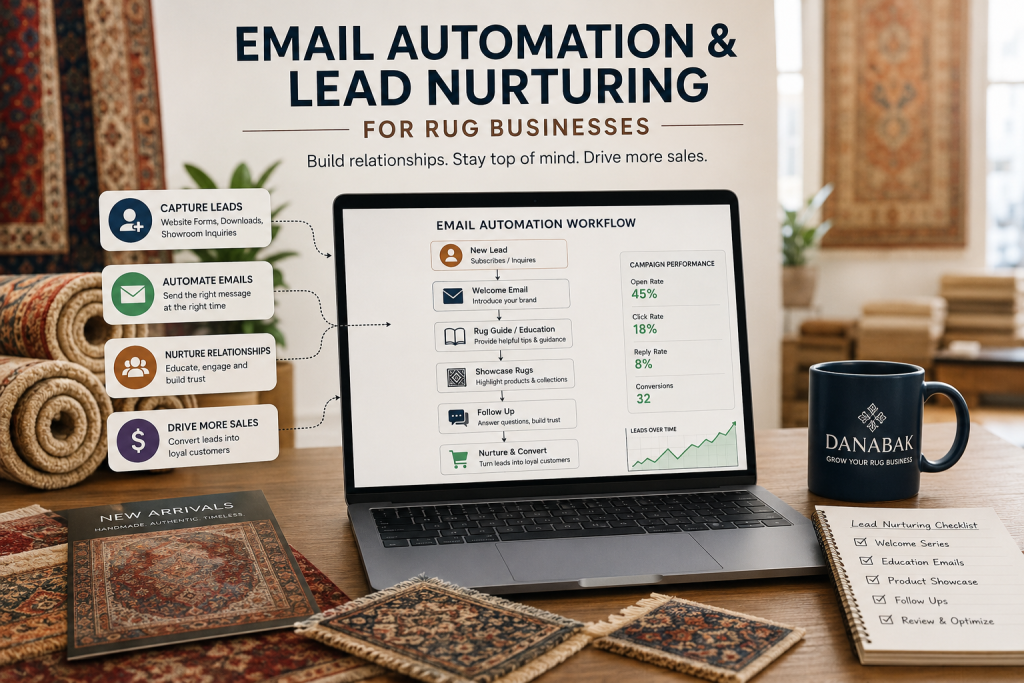
Email automation and lead nurturing can help rug businesses turn website visitors, showroom inquiries, past buyers, and design trade contacts into real sales opportunities. Many rug stores spend time and money getting traffic from Google, social media, referrals, events, and paid ads. But if those leads are not followed up properly, many potential buyers disappear.
Rug purchases often take time. A customer may browse several rugs, ask about size, compare materials, visit a showroom, talk with a designer, and return weeks later before making a decision. This makes email one of the most useful channels for rug businesses because it keeps the conversation alive after the first visit.
A strong email system does not need to feel pushy. It should help buyers understand rug quality, compare options, remember your showroom, and feel confident about the next step. When email automation is part of a full rug marketing strategy, it can support both online sales and showroom visits.
What Is Email Automation for Rug Businesses?
Email automation is the process of sending pre-planned emails based on customer actions, timing, or interest. Instead of manually sending every follow-up, a rug business can create workflows that respond automatically when someone fills out a form, downloads a guide, views a product, books an appointment, or joins an email list.
For example, if a visitor asks about handmade Persian rugs, they can receive a short follow-up email with helpful buying tips, showroom details, and a reminder to schedule a visit. If someone abandons a rug inquiry, the system can send a gentle reminder. If a past customer purchased a living room rug, they can later receive care tips or related rug recommendations.
The goal is not to send more emails just for activity. The goal is to send the right message at the right time.
What Is Lead Nurturing?
Lead nurturing is the process of building trust with potential customers before they are ready to buy. In the rug industry, this matters because many buyers do not make a decision immediately.
A person shopping for a rug may need to think about room size, color, style, material, budget, shipping, cleaning, and long-term value. A designer may need to source options for a client. A homeowner may need approval from a spouse or family member. A collector may want more detail about origin, condition, and construction.
Lead nurturing helps answer these questions over time. Instead of losing the lead after one conversation, the rug business stays useful and visible.
Why Rug Businesses Need Email Automation
Rug businesses often depend on high-value purchases. One sale can be important, especially for handmade, antique, luxury, custom, or oversized rugs. That means every qualified lead deserves proper follow-up.
Without automation, many opportunities are missed. A sales team may forget to follow up. A website visitor may leave without calling. A showroom visitor may not receive reminders. A designer contact may not hear about new arrivals. A past buyer may never be invited back.
Email automation solves this by creating a consistent follow-up system. It helps rug businesses stay organized and professional without adding too much manual work.
Danabak’s email marketing service can support businesses that need better email structure, segmentation, campaign planning, and customer follow-up.
How Email Automation Helps Rug Buyers
A good email automation system should help the buyer, not only the business. Rug buyers often need education before they feel ready.
Helpful email topics may include:
- How to choose the right rug size
- How to compare wool, silk, jute, and synthetic fibers
- What makes a handmade rug valuable
- How to care for a wool rug
- How to match rug colors with furniture
- When to use a rug pad
- How to prepare for a showroom visit
- How to choose between vintage and new rugs
These emails help customers make better decisions. They also position the rug business as a trusted guide instead of only a seller.
Key Email Automation Workflows for Rug Stores
A rug business does not need dozens of complicated workflows at the beginning. It should start with the most important customer journeys.
1. Welcome Email Sequence
A welcome sequence is sent when someone joins the email list, submits a form, or requests information. This is the first chance to introduce the brand and set expectations.
A good welcome sequence can include:
- A short brand introduction
- A guide to rug styles or materials
- A showroom invitation
- A link to popular collections
- A soft call to action for consultation
The tone should be warm and helpful. Many rug buyers need trust before they contact the store.
2. Inquiry Follow-Up Sequence
When someone asks about a rug, price, size, or availability, the follow-up should happen quickly. A delayed response can cost the sale.
An inquiry sequence can include:
- Confirmation that the request was received
- Helpful product details
- Similar rug options
- Showroom or appointment information
- A reminder after a few days
This workflow is especially helpful for e-commerce rug stores and local showrooms that receive many inquiries.
3. Abandoned Lead Sequence
Some visitors start the buying process but do not finish. They may view a product, start a form, or ask a question without taking the next step.
An abandoned lead sequence can bring them back with a helpful reminder. For example, the email can say that the rug is still available, similar options can be shared, or a showroom appointment can be scheduled.
This should not feel aggressive. A good abandoned lead email should sound like helpful customer service.
4. New Arrivals Sequence
Rug buyers and designers often want to see fresh inventory. A new arrivals email can highlight recently added rugs by style, color, size, material, or collection.
This works well for handmade and one-of-a-kind rugs because availability changes often. It also gives past buyers a reason to return.
For rug businesses already running email campaigns, new arrivals can become one of the strongest recurring content types.
5. Post-Purchase Sequence
The customer journey should not stop after a sale. A post-purchase email sequence can improve satisfaction and encourage future purchases.
Post-purchase emails may include:
- Thank-you message
- Rug care instructions
- Cleaning reminders
- Rug pad guidance
- Review request
- Referral invitation
- Future collection updates
A customer who buys once may buy again for another room. They may also refer friends, family, or designers.
Lead Segmentation for Rug Businesses
Segmentation means grouping contacts based on their interests, behavior, or customer type. This is important because not every rug buyer wants the same information.
A rug business may segment contacts by:
- Homeowners
- Interior designers
- Past buyers
- Trade accounts
- Local showroom leads
- Online shoppers
- Luxury rug buyers
- Vintage rug buyers
- Custom rug leads
- Cleaning or repair customers
A designer may want new arrival alerts and trade pricing. A homeowner may want style tips and room inspiration. A past buyer may want care reminders. A local lead may need showroom directions and appointment details.
Better segmentation leads to better emails.
What Should Rug Businesses Send?
Rug businesses should send emails that are useful, visual, and relevant. A simple discount email may work sometimes, but rug buyers often need more context.
Strong email ideas include:
- Room design inspiration
- Before and after rug styling
- New rug arrivals
- Material education
- Rug size guides
- Seasonal home décor ideas
- Designer collaboration features
- Customer project highlights
- Rug care tips
- Showroom events
- Limited collection announcements
The best emails combine product visibility with helpful education. This keeps the audience interested even when they are not ready to buy immediately.
Email Automation and Google Ads
Email automation works well with paid traffic. Many rug businesses invest in Google Ads, Meta Ads, or social campaigns but lose value because they do not have a strong follow-up system.
A person may click an ad, browse a rug, and leave. Without email capture or remarketing, that visitor may be gone. But if the page offers a useful guide, appointment form, or collection request, the business can continue the conversation by email.
This is why paid campaigns and email should not be separated. When rug businesses combine Google Ads with email follow-up, they can increase the value of every lead.
Email Automation and Website Design
A website must support email automation. If the site does not capture leads properly, there is nothing to nurture.
Important website elements include:
- Clear contact forms
- Appointment buttons
- Newsletter signup forms
- Product inquiry forms
- Downloadable buying guides
- Trade account forms
- Popups used carefully
- Thank-you pages
- Tracking and analytics
The website should make it easy for visitors to raise their hand. Once they do, the email system can guide them toward the next step.
Common Mistakes Rug Businesses Make
One common mistake is sending the same email to everyone. This can reduce engagement because the message may not match the buyer’s interest.
Another mistake is only sending sales promotions. If every email is about discounts, the brand may train customers to wait for lower prices.
A third mistake is weak timing. If a buyer asks about a rug and receives a follow-up two weeks later, the opportunity may already be gone.
A fourth mistake is not tracking results. Rug businesses should know which emails get opened, which links get clicked, and which campaigns generate calls, appointments, or sales.
Finally, some businesses send too many emails without enough value. Email should build trust, not create fatigue.
How to Measure Email Automation Success
Rug businesses should measure email performance beyond open rates. Opens can be helpful, but they do not show the full business impact.
Important metrics include:
- Lead form submissions
- Email click rate
- Appointment bookings
- Quote requests
- Phone calls
- Product inquiries
- Revenue from email
- Repeat purchases
- Review submissions
- Unsubscribe rate
The best metric depends on the goal of the campaign. A showroom may care about appointments. An e-commerce store may care about product inquiries and sales. A luxury rug dealer may care about qualified consultations.
A Simple 30-Day Email Plan
A rug business can start with a simple plan.
- Week 1: Set up lead capture forms and organize contacts by buyer type.
- Week 2: Create a welcome sequence with three helpful emails.
- Week 3: Create inquiry follow-up emails for product questions and showroom leads.
- Week 4: Send one useful campaign, such as new arrivals, rug size guidance, or rug care tips.
This simple foundation can improve follow-up quickly. Over time, the business can add more advanced workflows for designers, past buyers, abandoned leads, and seasonal campaigns.
Best Practices for Rug Business Email Automation
- Keep emails clear and helpful.
- Use strong rug images.
- Write subject lines that match buyer intent.
- Personalize based on interest when possible.
- Send education, not only promotions.
- Use short calls to action.
- Keep mobile readability in mind.
- Follow email consent and unsubscribe rules.
- Review results every month.
Email automation should feel like a helpful assistant for the customer and a sales support system for the business.
Final Thoughts
Email automation and lead nurturing can help rug businesses stay connected with buyers throughout a longer decision journey. This matters because rug purchases often involve style, size, material, price, trust, and timing.
A strong email system helps rug stores follow up faster, educate buyers, promote new arrivals, support designer relationships, recover missed opportunities, and bring past customers back.
For Danabak, this topic fits naturally into a complete digital growth strategy for rug businesses. Email should work together with SEO, paid ads, website design, local visibility, and content marketing. When all of these channels support each other, rug businesses have a stronger chance to get more customers and turn interest into real revenue.
FAQs
What is email automation for rug businesses?
Email automation for rug businesses means sending pre-planned emails automatically based on customer actions, such as form submissions, product inquiries, showroom appointments, purchases, or email signups.
Why do rug stores need lead nurturing?
Rug stores need lead nurturing because many buyers take time to decide. Email follow-up helps educate them, build trust, and keep the business visible until they are ready to buy.
What emails should a rug business send?
A rug business should send welcome emails, product inquiry follow-ups, new arrival updates, rug care tips, design inspiration, appointment reminders, post-purchase emails, and review requests.
How often should rug businesses email customers?
Most rug businesses can start with one to two helpful emails per month, plus automated follow-ups for inquiries and purchases. The right frequency depends on the audience and campaign goal.
Can email automation help showroom visits?
Yes, email automation can encourage showroom visits by sending appointment reminders, new arrival alerts, directions, consultation invitations, and helpful rug buying tips.
Is email marketing useful for luxury rug businesses?
Yes, email marketing can be very useful for luxury rug businesses because buyers often need trust, education, product stories, and personal follow-up before making a high-value purchase.
What is the best email automation workflow for rug stores?
The best starting workflow is a welcome sequence followed by product inquiry follow-up emails. These two workflows help capture new leads and continue conversations with active buyers.
How does email automation support paid ads?
Email automation helps paid ads by continuing the conversation after someone clicks. If a visitor does not buy immediately, email follow-up can bring them back and improve lead value.