


For rug businesses, paid advertising can be one of the fastest ways to reach new buyers. But choosing the right platform is not always simple. Many rug store owners ask the same question: should we spend our budget on Google Ads or Meta Ads?
The answer depends on your business goal, your audience, your website, and how your customers usually make buying decisions. A local rug showroom may need a different strategy than an online rug store. A luxury rug gallery may need a different approach than a wholesale rug supplier.
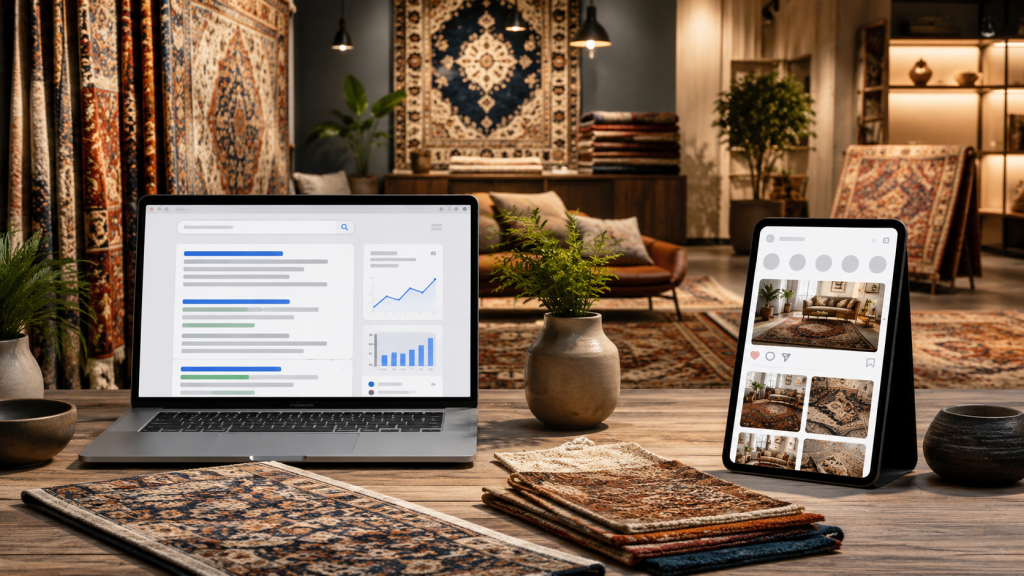
Google Ads and Meta Ads both work well for rug businesses, but they do not work in the same way. Google Ads usually reaches people who are already searching for rugs, while Meta Ads helps create interest through visual storytelling on platforms like Facebook and Instagram.
For most rug companies, the strongest results come when paid advertising is connected with a complete digital marketing strategy for rug businesses, not treated as a separate task.
Understanding the Difference Between Google Ads and Meta Ads
Google Ads is based heavily on search intent. This means your ad can appear when someone is actively looking for something related to rugs. A buyer may search for “rug store near me,” “Persian rugs in Charlotte,” “handmade wool rugs,” or “custom area rugs.” At that moment, the person already has interest, and your business has a chance to appear in front of them.
Meta Ads work differently. People do not usually open Facebook or Instagram to search for rugs directly. Instead, they discover products while scrolling. A beautiful room photo, a handmade rug video, a showroom collection, or a before-and-after interior design post can attract attention and create interest.
This is important because rugs are visual products. Buyers often need to see the color, texture, pattern, size, and room setting before they feel confident. That is why Meta Ads can be powerful for awareness, while Google Ads can be stronger for direct buying intent.
When Google Ads Works Best for Rug Businesses
Google Ads is often the better choice when your rug business wants to reach people who are ready to take action. These users are already searching for rugs, rug stores, rug cleaning, rug repair, or rug-related services.
For example, a local showroom can use Google Ads to appear when someone searches for rug stores in their area. An e-commerce rug business can target buyers looking for specific rug types, sizes, styles, or materials. A service-based rug business can use Google Ads to reach people searching for rug cleaning, rug repair, or rug appraisal.
Google Ads can be especially useful for high-intent keywords. If someone searches “buy handmade Persian rug online,” they are much closer to a purchase than someone casually scrolling through social media.
Danabak has already covered this topic in more detail in its guide on Google Ads for rug stores, which explains how paid search can support rug businesses when campaigns are properly planned.
When Meta Ads Works Best for Rug Businesses
Meta Ads are usually better for awareness, visual promotion, retargeting, and brand storytelling. This makes them very useful for rug businesses because rugs are emotional and design-driven purchases.
A customer may not be searching for a rug today, but they may stop scrolling when they see a beautiful living room with a hand-knotted rug. They may save the post, visit the website, follow the business, or come back later when they are ready to buy.
Meta Ads work well for luxury rugs, handmade rugs, antique rugs, Persian rugs, Oriental rugs, modern area rugs, and custom rug collections. These products benefit from strong visuals and storytelling.
For rug businesses that want to build visibility through social platforms, Danabak’s guide on Facebook ads and social media strategies for rug stores is a helpful resource.
Which Platform Brings Better Leads?
Google Ads often brings stronger direct leads because users are actively searching. If the keyword targeting is accurate and the landing page is strong, Google Ads can generate calls, quote requests, showroom visits, and online sales.
Meta Ads can also generate leads, but the buyer journey is usually longer. Someone may first see your rug on Instagram, visit your website later, compare your products, and then search your brand on Google before contacting you.
That does not mean Meta Ads are weak. It means Meta Ads often help with the earlier part of the buying journey. They create awareness and interest, while Google Ads often captures people when they are closer to making a decision.
For rug businesses, the best lead quality usually comes from matching the platform to the buyer’s intent. Google Ads is stronger for direct search demand. Meta Ads is stronger for visual discovery and remarketing.
Do Not Choose Based Only on Cost
Many rug business owners compare Google Ads and Meta Ads by cost per click. But cheaper clicks do not always mean better results.
Meta Ads may sometimes bring cheaper traffic, but that traffic may need more time before it converts. Google Ads may have a higher cost per click, but the visitor may be closer to buying.
A $3 click is not valuable if the visitor leaves without interest. A $12 click can be profitable if it turns into a showroom appointment or a high-value rug sale. That is why rug businesses should look at cost per qualified lead, cost per sale, return on ad spend, and conversion quality.
The website also plays a major role. If your rug business sends paid traffic to a weak website, both Google Ads and Meta Ads will struggle. A strong high-converting rug e-commerce website can help turn paid traffic into real customers.
The Importance of Landing Pages
One common mistake rug businesses make is sending all ad traffic to the homepage. This is not always the best approach.
Google Ads visitors usually need a landing page that matches their search. If someone searches for “custom rugs in Charlotte,” the landing page should clearly talk about custom rugs, local service, showroom experience, materials, reviews, and the next step.
Meta Ads visitors usually need a more visual page. They may respond better to lifestyle images, room inspiration, product collections, customer reviews, and educational content that helps them understand rug quality.
The landing page should make it easy for visitors to take action. That action may be calling the showroom, booking an appointment, requesting a quote, viewing a rug collection, or visiting the store.
For rug businesses that need stronger landing pages, Danabak’s website design services can help create pages that are built for both SEO and conversions.
How SEO Supports Both Google Ads and Meta Ads
Paid ads can bring traffic quickly, but SEO builds long-term visibility. Rug businesses should not depend only on ads because campaign costs can increase and traffic stops when the budget stops.
SEO helps your website appear in organic search results, while paid ads help you reach buyers faster. Together, they create stronger visibility across the customer journey.
For example, a rug store can run Google Ads for “rug store near me” while also improving organic visibility through local rug store SEO. The same business can use Meta Ads to promote new collections while publishing helpful blogs that answer buyer questions.
This combination builds trust. When buyers see your rug business in ads, organic results, Google Maps, and social media, your brand looks more reliable.
Which Platform Is Better for Local Rug Stores?
For local rug stores and showrooms, Google Ads is often a strong starting point. Local buyers often search when they are ready to visit a store or compare nearby options.
Google Ads can help your business appear for location-based searches such as “rug store near me,” “Oriental rugs near me,” or “rug showroom in Charlotte.” These searches usually have strong local intent.
However, Meta Ads can also support local rug stores. They can be used to promote showroom events, new arrivals, seasonal collections, designer partnerships, or special offers. Meta Ads can also keep your business visible to people who live near your showroom but are not searching yet.
Local rug businesses should also focus on Google Maps visibility. Danabak’s guide on how rug stores can rank in Google Maps explains why local visibility is important for attracting nearby buyers.
Which Platform Is Better for Rug E-Commerce?
For rug e-commerce businesses, both Google Ads and Meta Ads can be useful.
Google Ads can reach buyers who are searching for specific products. A person may search for “8×10 wool rug,” “modern Persian rug,” “blue handmade rug,” or “large area rug for living room.” These searches show clear product interest.
Meta Ads can help buyers discover rug collections visually. This is useful because many buyers do not know exactly what they want until they see it. A well-designed Instagram or Facebook ad can introduce them to a style, color, or room idea they had not considered.
For e-commerce rug businesses, Google Ads can capture purchase intent, while Meta Ads can create discovery and bring visitors back through retargeting.
Which Platform Is Better for Luxury Rug Businesses?
Luxury rug businesses need more than traffic. They need trust, brand positioning, and strong storytelling.
Google Ads can help luxury rug businesses reach buyers searching for high-value terms such as handmade rugs, antique rugs, Persian rugs, Oriental rugs, and luxury rugs near me. These searches can bring serious buyers.
Meta Ads can show the beauty and craftsmanship behind each rug. A video of a hand-knotted rug, a close-up of texture, or a styled room image can create emotional interest that a simple search ad cannot fully deliver.
For luxury rug businesses, Google Ads can capture existing demand, while Meta Ads can create desire and strengthen brand identity.
Why Both Platforms Often Work Better Together
The best strategy is not always choosing one platform over the other. In many cases, rug businesses get better results when Google Ads and Meta Ads work together.
Meta Ads can introduce your rug brand to new audiences through visuals and storytelling. Google Ads can capture people when they search for rugs or rug services. Retargeting can bring visitors back after they view your products, visit your website, or interact with your brand.
For example, someone may first see your rug collection on Instagram. Later, they search Google for your brand or a similar rug style. If your business appears in both places, you have a better chance of winning that customer.
This is why paid advertising should be part of a full marketing system, not a single-channel effort.
Common Mistakes Rug Businesses Should Avoid
One of the biggest mistakes is running ads without proper tracking. If you do not know which ads generate calls, appointments, quote requests, or sales, it becomes difficult to improve results.
Another mistake is using weak visuals. Rug businesses need high-quality product photos, lifestyle images, showroom photos, and videos. A rug shown in a beautiful room setting will usually perform better than a plain image with no context.
A third mistake is sending visitors to the wrong page. If the ad promotes handmade rugs, the landing page should focus on handmade rugs. If the ad promotes a local showroom, the page should clearly show location, phone number, opening hours, trust signals, and appointment options.
Rug businesses should also avoid treating ads as the only marketing channel. A buyer who is not ready today may convert later through rug store email campaigns, helpful blog content, social proof, or retargeting.
So, Should Your Rug Business Choose Google Ads or Meta Ads?
Choose Google Ads if your main goal is to reach people who are already searching for rugs, rug stores, or rug-related services. It is a strong option for local rug stores, rug repair services, rug cleaning businesses, and e-commerce rug shops with clear product categories.
Choose Meta Ads if your main goal is brand awareness, visual discovery, retargeting, and social engagement. It is a strong option for luxury rugs, handmade rugs, showroom promotions, designer collections, and visually rich campaigns.
Choose both if your rug business wants a complete customer journey. Meta Ads can create interest, Google Ads can capture intent, SEO can build long-term visibility, and email marketing can nurture visitors until they are ready to buy.
The better platform is not always the cheapest one. The better platform is the one that matches your business goal, customer intent, product value, website quality, and sales process.
Final Thoughts
Google Ads and Meta Ads both have value for rug businesses, but they serve different purposes. Google Ads is powerful for reaching people who are already searching. Meta Ads is powerful for visual discovery, storytelling, and retargeting.
A local rug showroom may start with Google Ads and local SEO. A luxury rug brand may benefit from Meta Ads and strong visual campaigns. An e-commerce rug store may need both platforms to capture search demand and inspire new buyers.
The best results happen when ads are supported by SEO, website design, content, email marketing, and conversion tracking. To build a stronger growth strategy, explore Danabak’s digital marketing for rug businesses or read more about how to get more customers for your rug store.
FAQs
Are Google Ads better than Meta Ads for rug businesses?
Google Ads are often better for reaching people who are actively searching for rugs or rug services. Meta Ads are better for visual discovery, brand awareness, and retargeting.
Do Meta Ads work for rug stores?
Yes, Meta Ads can work well for rug stores because rugs are visual products. Facebook and Instagram ads can show room settings, rug textures, new arrivals, and design inspiration.
Should a rug business run both Google Ads and Meta Ads?
Yes, many rug businesses benefit from using both. Google Ads can capture search intent, while Meta Ads can build awareness and bring previous visitors back through retargeting.
Which ad platform is better for local rug showrooms?
Google Ads is often a strong starting point for local rug showrooms because it reaches people searching nearby. Meta Ads can support local awareness, showroom events, and new collection promotions.
Why are my rug ads not converting?
Rug ads may not convert because of poor targeting, weak visuals, unclear landing pages, missing tracking, or low trust on the website. The ad platform matters, but the full customer journey matters too.