


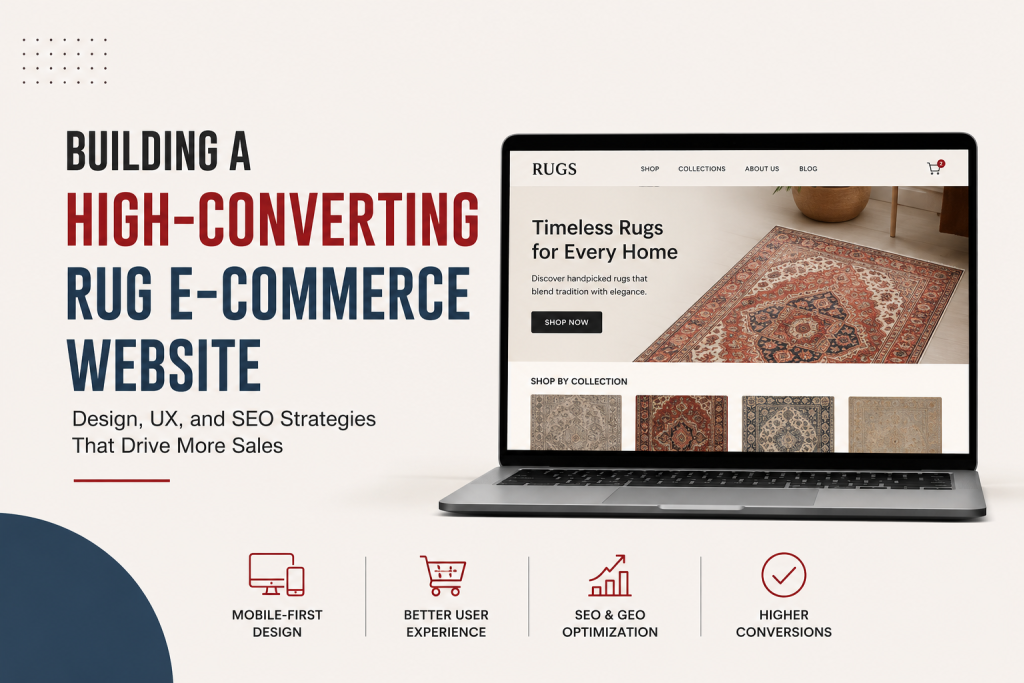
The rug industry has embraced digital commerce at an incredible pace. Today, homeowners, interior designers, property managers, and businesses regularly shop for rugs online, comparing styles, sizes, materials, and prices from the comfort of their homes. While this shift has created enormous opportunities for rug retailers, it has also increased competition. Simply having an online store is no longer enough.
Many rug businesses invest heavily in advertising and search engine optimization but struggle to convert visitors into customers. The reason is often simple: their website is not designed to support the way people shop for rugs online.
Unlike many consumer products, rugs are highly visual purchases. Customers cannot touch the material, feel the texture, or see how the rug will look in their space before buying. Because of this, every aspect of a rug website—from navigation and product presentation to mobile usability and checkout flow—must work together to build confidence and reduce hesitation.
A well-designed rug e-commerce website does more than attract traffic. It creates a shopping experience that encourages visitors to stay longer, explore products, trust the brand, and ultimately make a purchase.
Why Rug E-Commerce Websites Require a Different Approach
Selling rugs online presents unique challenges that many other e-commerce businesses do not face. When someone buys a phone charger or office supplies, the decision is often straightforward. Rugs, however, are deeply connected to personal style, interior design preferences, room dimensions, and budget considerations.
Customers frequently ask themselves questions such as:
- Will this rug match my furniture?
- Is the size appropriate for my room?
- What does the texture actually look like?
- Is the material durable enough for my lifestyle?
- Can I trust this retailer?
A successful rug e-commerce design addresses these concerns before they become obstacles. The goal is to create a digital shopping experience that feels as close as possible to viewing the rug in person.
The Foundation of Effective Rug E-Commerce Design
Great rug e-commerce design starts with clarity. Visitors should immediately understand what the business offers and how to find the products they need. If a homepage feels cluttered or navigation is confusing, users are likely to leave before exploring the product catalog.
The best-performing rug websites focus on simplicity and usability. They use clean layouts, professional photography, and intuitive navigation to guide shoppers through the buying journey.
An effective homepage typically highlights featured collections, best-selling products, seasonal promotions, and popular categories while maintaining a clean visual structure. Instead of overwhelming visitors with endless options, it helps them take the next logical step.
Strong rug website design also reinforces brand credibility. Modern typography, consistent branding, high-quality imagery, and professional design elements communicate trust and reliability. Since many rugs represent a significant investment, customers naturally evaluate the professionalism of a website before making a purchase.
Creating an Online Rug Store UX That Encourages Conversions
User experience plays a major role in determining whether visitors become customers. Even the most beautiful website can struggle to generate sales if shoppers cannot easily find what they are looking for.
One of the most important aspects of online rug store UX is navigation. Customers should be able to browse products based on their specific needs rather than scrolling through hundreds of irrelevant options.
The most successful rug stores allow shoppers to filter products by:
- Size
- Color
- Material
- Style
- Pattern
- Shape
- Price range
- Room type
These filtering options significantly reduce friction and help users discover products that match their preferences more quickly.
Search functionality is equally important. Many customers arrive with a specific idea in mind, such as an “8×10 wool rug” or a “modern blue area rug.” A robust search feature should understand product variations, related terms, and common misspellings to deliver relevant results.
The easier it is for visitors to find suitable products, the higher the likelihood of conversion.
Why a Mobile-First Rug Website Is Essential
Mobile shopping continues to dominate e-commerce. For many retailers, more than half of website traffic now comes from smartphones and tablets. This makes a mobile-first rug website a necessity rather than a luxury.
Unfortunately, some rug websites still prioritize desktop experiences while treating mobile optimization as an afterthought. This approach often results in frustrating user experiences that drive potential customers away.
A mobile-first website is designed with smartphone users in mind from the beginning. Navigation remains simple, buttons are easy to tap, images load efficiently, and product information is easy to consume on smaller screens.
Several mobile optimization strategies consistently improve performance:
- Responsive layouts that adapt to all screen sizes
- Fast-loading images without sacrificing quality
- Sticky add-to-cart buttons
- Mobile-friendly navigation menus
- Streamlined checkout forms
- Click-to-call functionality for customer support
Beyond improving user experience, mobile optimization directly impacts search visibility. Search engines increasingly prioritize mobile performance when ranking websites, making mobile-first design essential for both SEO and conversions.
Product Pages That Turn Browsers Into Buyers
Product pages are where purchasing decisions happen. Every detail on these pages should help answer customer questions and reduce uncertainty.
Photography is arguably the most important component of a rug product page. Since customers cannot physically inspect the product, images must provide as much detail as possible.
Effective rug product pages typically include:
- Full rug images
- Close-up texture shots
- Lifestyle photos showing the rug in real rooms
- Multiple viewing angles
- Zoom functionality for detailed inspection
High-quality imagery helps customers visualize ownership and builds confidence in the purchase decision.
Descriptions should also go beyond generic specifications. Instead of simply stating the material and dimensions, explain how the rug fits into a customer’s lifestyle and design goals.
For example, rather than saying a rug is made from wool, explain how wool offers durability, natural insulation, softness underfoot, and long-term value. These details help customers understand not just what the product is, but why it matters.
Product pages should also include comprehensive specifications such as dimensions, pile height, construction method, material composition, care instructions, and country of origin. Providing this information upfront reduces hesitation and minimizes pre-purchase questions.
Building Trust Through Social Proof
Trust is one of the most important conversion factors for online rug retailers. Since customers cannot physically interact with products before purchasing, they rely heavily on the experiences of others.
Customer reviews provide reassurance and help answer common concerns. Shoppers often trust feedback from previous buyers more than marketing messages from the brand itself.
The most effective rug websites prominently display:
- Verified customer reviews
- Star ratings
- User-generated photos
- Customer testimonials
- Case studies for larger projects
Reviews featuring real customer images are particularly powerful because they demonstrate how rugs appear in actual living spaces rather than professionally staged environments.
Trust signals should also appear throughout the website. Secure payment badges, return policies, warranty information, and customer support details all contribute to a stronger sense of confidence.
Rug Checkout Optimization: Reducing Cart Abandonment
Many rug retailers focus heavily on attracting visitors but overlook the final stage of the buying journey. A poorly designed checkout process can undermine all previous marketing efforts.
Cart abandonment remains one of the biggest challenges in e-commerce. Customers may spend considerable time researching products, adding items to their cart, and preparing to buy, only to leave before completing the transaction.
Effective rug checkout optimization focuses on removing unnecessary friction.
Several common issues contribute to abandoned carts:
- Unexpected shipping costs
- Complicated checkout forms
- Mandatory account creation
- Limited payment options
- Slow-loading checkout pages
- Lack of security assurances
Addressing these issues can significantly improve conversion rates.
Guest checkout is particularly important. While encouraging account creation can provide long-term benefits, forcing customers to register before purchasing often creates resistance. Allowing shoppers to complete their purchase first typically leads to better results.
Transparency is equally critical. Customers appreciate knowing the total cost of their purchase before reaching the final step. Clearly displaying shipping fees, taxes, and delivery timelines helps prevent unpleasant surprises that could derail the sale.
The Role of Visualization Tools in Rug E-Commerce
One of the biggest barriers to online rug purchases is uncertainty. Customers often struggle to imagine how a rug will look within their home.
Modern visualization technologies help solve this problem by allowing shoppers to preview rugs in their own spaces.
Advanced rug retailers are increasingly implementing:
- Augmented reality previews
- Room visualization tools
- Size comparison overlays
- Interactive room planners
These features help customers make more informed decisions and often lead to higher conversion rates.
When buyers can visualize a product within their environment, they feel more confident moving forward with a purchase.
SEO and GEO Strategies for Rug Retailers
A high-conversion rug site needs consistent traffic to generate sales. This is where SEO and GEO become essential.
Search engine optimization helps rug businesses attract customers actively searching for products, advice, and design inspiration. Category pages targeting keywords such as Persian rugs, wool rugs, area rugs, modern rugs, and handmade rugs can generate highly relevant traffic when properly optimized.
At the same time, Generative Engine Optimization (GEO) is becoming increasingly important. Consumers now use AI-powered search experiences to research products and find recommendations. Websites that provide comprehensive, authoritative content are more likely to appear in AI-generated answers.
To improve visibility in both traditional and AI search environments, rug retailers should focus on:
- Publishing in-depth educational content
- Answering customer questions clearly
- Creating comprehensive buying guides
- Building topical authority around rug-related subjects
- Maintaining strong internal linking structures
Content topics such as rug sizing guides, material comparisons, decorating tips, maintenance advice, and room-specific recommendations can attract valuable traffic while supporting product sales.
Common Mistakes That Hurt Rug Website Conversions
Many rug businesses unknowingly limit their growth because of avoidable website issues. Slow-loading pages, poor mobile experiences, weak product descriptions, and confusing navigation can all negatively impact conversion rates.
Another common mistake is treating the website as a simple product catalog rather than a sales tool. Customers often need guidance before making purchasing decisions, particularly for high-ticket items. Websites that educate and assist shoppers throughout the buying process tend to outperform those that focus solely on product listings.
Businesses should also avoid neglecting analytics. Understanding how users interact with the website provides valuable insights into areas that need improvement. Regular testing and optimization help uncover opportunities to increase conversions over time.
Conclusion
Building a high-converting rug e-commerce website requires more than attractive design. Success comes from understanding customer behavior and creating an experience that supports every stage of the buying journey.
From intuitive navigation and mobile-first design to detailed product pages and streamlined checkout processes, every element contributes to conversion performance. When shoppers can easily find products, evaluate options, trust the retailer, and complete purchases without friction, conversion rates naturally improve.
As competition in the online rug market continues to grow, businesses that prioritize rug e-commerce design, online rug store UX, rug checkout optimization, and mobile-first website development will be better positioned to attract customers, increase revenue, and achieve long-term success.
Frequently Asked Questions
What is rug e-commerce design?
Rug e-commerce design refers to the structure, functionality, and visual presentation of an online rug store. Its purpose is to improve user experience, build trust, and increase conversions.
Why is a mobile-first rug website important?
A mobile-first rug website ensures that shoppers using smartphones and tablets enjoy a seamless browsing and purchasing experience. Mobile optimization also supports stronger search engine rankings.
How can an online rug store improve conversion rates?
Improving product filtering, enhancing product photography, simplifying navigation, displaying customer reviews, and optimizing checkout processes are among the most effective ways to increase conversions.
What causes cart abandonment on rug websites?
Unexpected costs, complicated checkout processes, limited payment methods, slow page speeds, and insufficient trust signals are among the most common causes of cart abandonment.
How does rug checkout optimization increase sales?
Rug checkout optimization reduces friction during the purchasing process, making it easier for customers to complete transactions and reducing the likelihood of abandoned carts.