


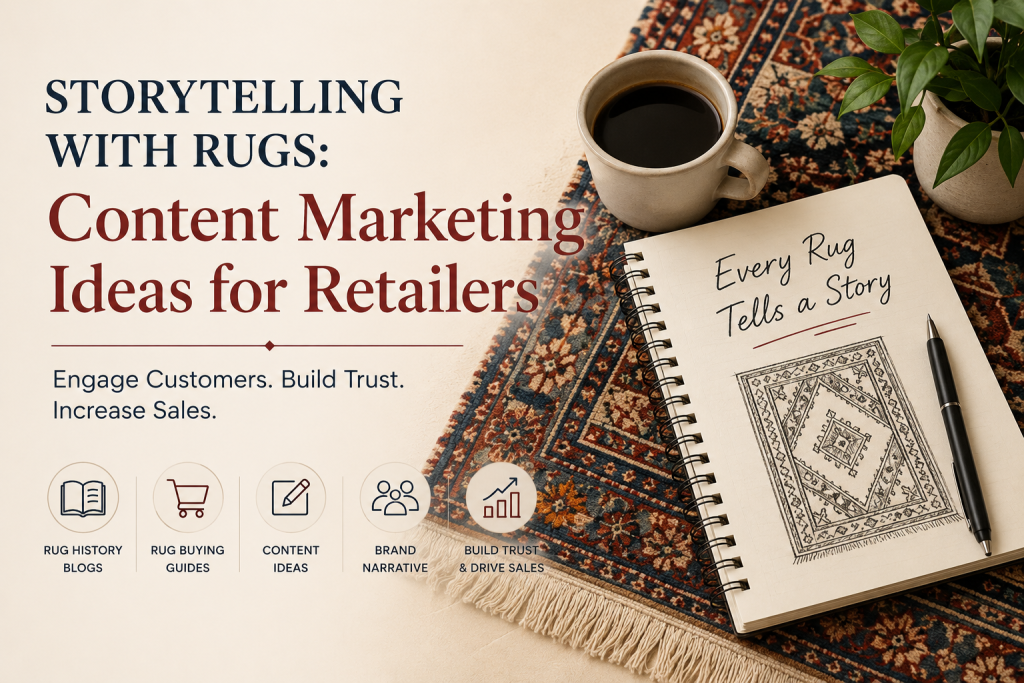
Most rug retailers focus their marketing on products, prices, and promotions. While those elements certainly matter, they rarely create lasting connections with customers. A handmade Persian rug, vintage Oriental rug, or contemporary designer rug is much more than a floor covering. Every rug carries a story, and those stories can become some of the most powerful marketing assets a business owns.
Modern consumers increasingly want to buy from brands they trust and connect with emotionally. They want to understand where products come from, how they are made, what makes them unique, and why they deserve a place in their homes. This is where storytelling becomes a valuable content marketing strategy.
Effective rug storytelling transforms a product catalog into an engaging brand experience. It helps retailers differentiate themselves from competitors, improve customer engagement, strengthen search visibility, and build long-term loyalty.
Whether you operate a local rug gallery, an online rug store, or a wholesale rug business, storytelling can help you create content that resonates with customers while supporting your SEO and digital marketing goals.
Why Storytelling Matters in the Rug Industry
Unlike many retail products, rugs often carry cultural, artistic, and historical significance. Customers are not simply purchasing an item for practical use. They are investing in a piece that contributes to the atmosphere, personality, and design of a space.
This emotional component makes storytelling particularly effective.
When customers learn about the craftsmanship behind a handmade rug, the traditions of a weaving region, or the inspiration behind a modern design, the product becomes more meaningful. Instead of comparing rugs solely based on price, buyers begin evaluating value, heritage, and authenticity.
Storytelling also helps businesses stand out in a crowded marketplace. Many retailers sell similar products, but every business has unique experiences, expertise, and perspectives that can be shared through content.
A strong brand narrative allows customers to understand who you are, what you believe in, and why your products matter.
Building a Strong Brand Narrative for Rugs
Every successful content strategy begins with a clear brand story.
Your brand narrative is not simply an “About Us” page. It is the ongoing story that connects your company, products, customers, and mission.
For rug retailers, a compelling brand narrative may focus on:
- Family traditions in the rug industry
- Expertise in handmade rugs
- Relationships with artisans and suppliers
- Passion for interior design
- Commitment to preserving cultural craftsmanship
- Helping customers create beautiful living spaces
The goal is to communicate something meaningful that customers can relate to.
For example, a family-owned rug business with decades of experience can share stories about how different generations contributed to building the company. A retailer specializing in handmade rugs can highlight the craftsmanship and artistry behind each collection.
These stories create authenticity, which is increasingly important in modern marketing.
Turning Rug History Into Valuable Content
One of the most effective content marketing opportunities available to rug retailers is educational content focused on rug history.
Many consumers are fascinated by the origins of Persian rugs, Oriental rugs, Turkish rugs, Moroccan rugs, and other traditional styles. Educational content allows businesses to satisfy this curiosity while establishing authority within the industry.
A well-written rug history blog can attract organic traffic from customers researching products long before they are ready to purchase.
Topics may include:
- The history of Persian rugs
- How Oriental rugs became valuable collectibles
- Traditional weaving methods through the centuries
- The symbolism behind common rug patterns
- Famous rug-producing regions around the world
This type of content performs particularly well because it combines educational value with commercial relevance.
Customers searching for information about rug history often become potential buyers once they understand the craftsmanship and cultural significance behind different products.
Sharing the Stories Behind Individual Rugs
Product storytelling is one of the most underutilized marketing strategies in the rug industry.
Many product pages focus exclusively on specifications such as dimensions, materials, and pricing. While those details are important, they rarely inspire emotional engagement.
Instead of presenting rugs as inventory items, retailers can present them as pieces with unique stories.
For example, a product description might explain:
- The region where the design originated
- The cultural influences behind the pattern
- The weaving techniques used
- The inspiration for the color palette
- The artisans responsible for production
These details help customers appreciate the rug beyond its physical appearance.
Story-driven product descriptions often create stronger emotional connections and can contribute to higher conversion rates.
Creating Rug Buying Guides That Educate and Convert
Many shoppers arrive at rug websites with questions rather than purchase intent. They may not know what size rug they need, which materials are best for their lifestyle, or how to select colors that complement their décor.
This creates an opportunity for informative content.
Comprehensive rug buying guides serve two important purposes. They help customers make confident decisions while attracting valuable organic traffic from search engines.
Some of the most effective rug buying guides include:
- How to Choose the Right Rug Size for Every Room
- Wool vs Synthetic Rugs: Which Is Better?
- How to Buy a Handmade Rug
- Choosing Rugs for High-Traffic Areas
- Rug Color Selection Guide
- Understanding Rug Materials and Construction
These guides naturally position your business as a trusted source of expertise rather than simply a seller of products.
Customer Stories as Marketing Assets
One of the most powerful forms of storytelling comes directly from customers.
Customer success stories demonstrate how rugs transform living spaces and improve home environments. They provide social proof while helping prospective buyers visualize results.
Instead of publishing generic testimonials, consider creating detailed customer stories that explain:
- The customer’s design challenge
- The rug selection process
- Why a particular rug was chosen
- The final outcome
- Lessons learned during the project
Including before-and-after images can make these stories even more compelling.
Authentic customer experiences often resonate more strongly than traditional promotional content because they provide real-world examples of product value.
Behind-the-Scenes Content Builds Trust
Consumers increasingly value transparency. They want to understand how products are sourced, created, and delivered.
Behind-the-scenes content provides an opportunity to pull back the curtain and show the human side of your business.
This content can include stories about:
- Rug sourcing trips
- Relationships with suppliers
- Restoration projects
- Rug cleaning processes
- Showroom preparation
- Inventory selection
These stories help customers understand the effort, expertise, and care that go into every rug sold.
Behind-the-scenes content also reinforces credibility and strengthens brand trust.
Using Storytelling to Improve SEO Performance
Storytelling is not only effective for customer engagement. It can also support search engine optimization.
Many rug retailers focus exclusively on transactional keywords such as “buy Persian rugs” or “area rugs for sale.” While these keywords are important, informational content often attracts larger audiences during earlier stages of the buying journey.
Story-driven content naturally supports a broader range of search queries.
For example, a rug history blog may rank for educational searches, while a customer case study may attract users researching design ideas. Buying guides can capture traffic from shoppers comparing options before making a purchase.
Together, these content types help build topical authority and increase overall website visibility.
Search engines increasingly reward websites that demonstrate expertise and provide valuable information. Storytelling allows rug retailers to showcase both.
Storytelling in the Age of AI Search
As AI-powered search experiences become more common, content quality matters more than ever.
Platforms such as ChatGPT, Gemini, and AI-powered search engines prioritize content that provides clear, comprehensive, and trustworthy information.
Story-driven content often performs well in these environments because it contains unique insights and original perspectives that cannot easily be replicated.
To improve visibility in AI-generated search results, focus on creating content that:
- Answers common customer questions
- Provides real-world examples
- Demonstrates expertise
- Includes unique experiences and observations
- Offers practical advice
The more original and informative your content becomes, the more valuable it is to both traditional search engines and AI-powered discovery platforms.
Content Ideas Rug Stores Can Use Year-Round
Many retailers struggle to consistently generate new content. Fortunately, the rug industry offers an endless supply of storytelling opportunities.
Consider building content around:
- Rug care and maintenance tips
- Design trend predictions
- Customer room makeovers
- Rug restoration projects
- Cultural influences in rug design
- Seasonal decorating ideas
- Artisan profiles
- Collection launch stories
- Interior designer collaborations
- Rug buying mistakes to avoid
These topics allow businesses to educate customers while continuously reinforcing expertise and authority.
The most effective content marketing strategies balance promotional content with educational and inspirational material.
Measuring the Success of Storytelling Content
Like any marketing initiative, storytelling should be evaluated using measurable data.
Important metrics include:
- Organic traffic growth
- Average engagement time
- Conversion rates
- Newsletter signups
- Social media shares
- Backlinks
- Assisted conversions
Monitoring these metrics helps identify which stories resonate most strongly with audiences and which content formats generate the greatest business impact.
Successful storytelling is not about publishing content for its own sake. It is about creating meaningful experiences that support long-term business growth.
Conclusion
In an increasingly competitive marketplace, rug retailers need more than product listings and promotional campaigns to stand out. Customers want to connect with brands, understand products, and feel confident in their purchasing decisions.
Storytelling provides a powerful way to meet those expectations.
By investing in rug storytelling, creating educational rug history blogs, publishing comprehensive rug buying guides, and developing an authentic brand narrative for rugs, businesses can build stronger relationships with customers while improving search visibility and driving sales.
The most successful rug retailers understand that every rug has a story worth telling. The businesses that learn how to share those stories effectively are often the ones that earn the greatest trust, engagement, and long-term growth.
Frequently Asked Questions
What is rug storytelling in content marketing?
Rug storytelling is the practice of using narratives about craftsmanship, history, culture, design, and customer experiences to create more engaging marketing content for rug businesses.
Why is storytelling important for rug retailers?
Storytelling helps rug retailers build trust, differentiate themselves from competitors, strengthen customer relationships, and improve content marketing performance.
What are the best content ideas for a rug store?
Some of the most effective content ideas include rug buying guides, rug history articles, customer success stories, artisan profiles, design inspiration content, and behind-the-scenes business stories.
How does storytelling help SEO?
Storytelling creates unique, informative content that attracts organic traffic, increases engagement, supports topical authority, and improves visibility in both traditional and AI-powered search results.
What is a brand narrative for rugs?
A brand narrative is the ongoing story that explains a rug company’s mission, values, expertise, and unique perspective, helping customers connect with the business on a deeper level.