


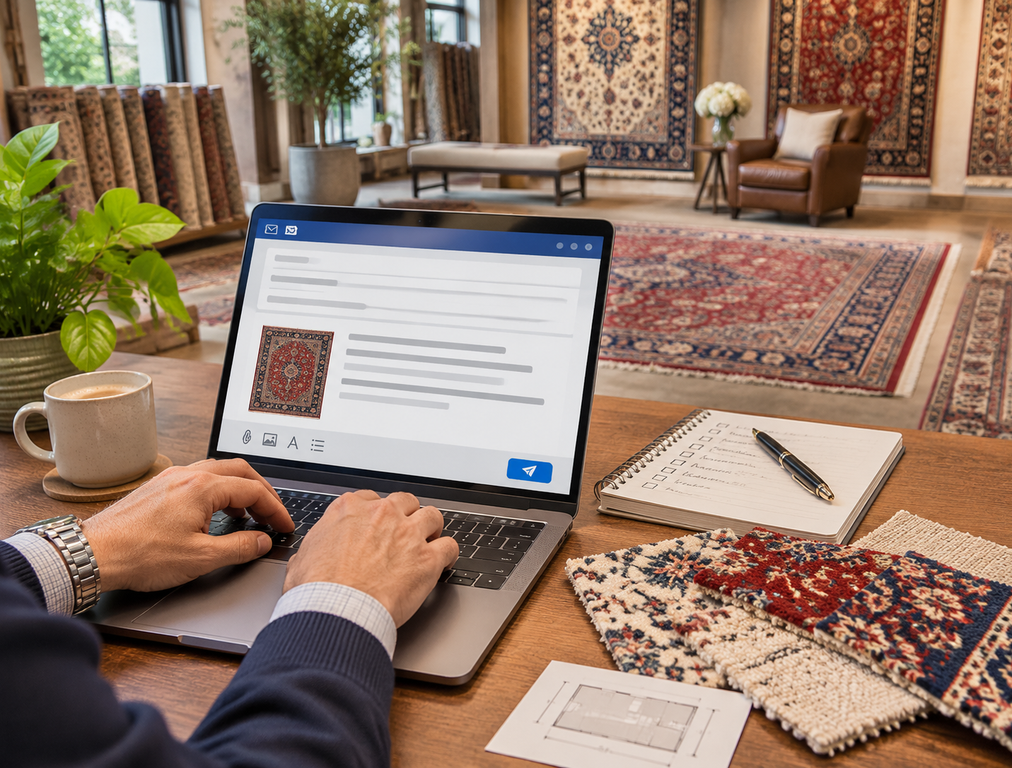
A showroom consultation gives rug retailers an opportunity to understand what customers are looking for, discuss their interior design requirements and recommend products that suit their spaces. However, the conversation should not end when the customer leaves the showroom. Many shoppers need additional time to compare designs, review prices, discuss options with family members or measure their rooms before making a final decision. A well-written rug consultation follow up email helps us continue that conversation, remind customers of the products they considered and provide the information they need to move towards a purchase.
We should approach every follow-up email as an extension of the original consultation rather than another generic sales message. If a customer visited the showroom looking for an 8×10 handmade Persian rug, the follow-up should reflect that specific requirement instead of promoting unrelated products from the entire catalog. By including the customer’s preferences, relevant recommendations, answers to outstanding questions and a clear next step, we can make the communication more useful while creating another opportunity to convert the enquiry into a sale.
Why Follow-Up Emails Matter After a Rug Consultation
Customers visiting a rug showroom are often considering a significant home purchase, and their decisions may involve several people and practical considerations. They may need to confirm room dimensions, compare colours against existing furniture, review material differences or understand whether a particular rug is suitable for a high-traffic area. Even when a customer shows strong interest during the consultation, they may not be ready to purchase immediately.
A follow-up email gives us an opportunity to address these considerations after the customer has had time to think about the available options. It also creates a written record of the consultation, allowing the customer to revisit product details, compare recommendations and ask additional questions without repeating the entire conversation. When we follow up consistently and provide genuinely useful information, we make the buying process easier and give customers a clear reason to continue engaging with the showroom.
Send the Follow-Up at the Right Time
Timing is important because customers may forget product details or continue comparing competing stores if there is a long gap after the consultation. We generally recommend sending the first personalised follow-up within one business day of the showroom visit, while the discussion and product recommendations are still fresh. This gives the customer a convenient opportunity to review the information and respond while the consultation remains relevant.
However, the timing should also reflect the customer’s purchasing stage. Someone who requested a quotation for a specific rug may need a quicker response than someone who visited the showroom only to explore different collections. If the customer mentioned a particular decision date, delivery requirement or upcoming interior project, we should use that information to determine the most appropriate follow-up schedule rather than sending identical reminders to everyone.
Personalise the Email Around the Customer’s Requirements
Personalisation should involve more than adding the customer’s first name to the subject line. We want the email to demonstrate that we understood the customer’s actual requirements during the consultation. Before writing the message, we review the showroom notes and identify important details such as the preferred rug dimensions, style, colour palette, material, budget, intended room and any products the customer particularly liked.
For example, if someone visited the showroom looking for a large neutral wool rug for a living room, we can mention that requirement and recommend a few suitable options. If the customer was comparing traditional Persian designs, we can include the relevant collection and explain why the shortlisted products matched the original discussion. This level of personalisation makes the follow-up feel like a continuation of a real conversation instead of an automated message sent to every showroom visitor.
Recap the Consultation Clearly
A useful follow-up email should briefly remind the customer what we discussed and what recommendations we made. This is especially important when the consultation involved several products, different dimensions or multiple design possibilities. We should organise the recap around the customer’s main requirements so they can quickly understand which options were discussed and why those products were selected.
We do not need to reproduce every detail of the showroom conversation. Instead, we highlight the decisions that matter, such as the preferred dimensions, suitable materials, colour direction and the customer’s most interesting product choices. If the customer was uncertain between two rugs, we can explain the main differences and help them continue comparing the options after leaving the showroom.
Include Relevant Rug Recommendations
One of the most valuable parts of a consultation follow-up is presenting products that genuinely match the customer’s requirements. We can include direct links to the shortlisted rug product pages, along with clear images, dimensions, material details and current prices where appropriate. This allows customers to revisit the products without searching through the entire website or trying to remember their names from the showroom visit.
We should avoid overwhelming the customer with a large collection of unrelated products. A carefully selected shortlist is usually more helpful because it focuses attention on the options that were already discussed. If we want to suggest an alternative, we should explain why it may suit the customer’s room or requirements better, such as a different size, colour combination or material. The goal is to make the next purchasing decision easier rather than create another round of unnecessary product research.
Answer Questions That Were Not Resolved During the Visit
Some showroom consultations end with questions that require additional research or confirmation. Customers may ask about rug availability, delivery costs, return conditions, cleaning requirements, product origins, material composition or the suitability of a particular construction for their intended space. If we promised to confirm any of these details, the follow-up email should address them directly rather than leaving the customer to contact the showroom again.
We should also be careful not to provide information that has not been verified. For example, if a customer asks whether a particular rug can be delivered by a certain date, we should confirm the available delivery information before making a commitment. If an origin, age or construction detail is uncertain, we should communicate that uncertainty honestly instead of presenting an assumption as a confirmed product fact. Accurate information helps maintain the trust established during the showroom consultation.
Make the Next Step Easy to Understand
Every effective consultation follow-up should give the customer a clear and convenient next step. Depending on the conversation, that might involve requesting a quotation, arranging a second showroom visit, booking a video consultation, reviewing a sample, confirming measurements or placing an order. We should avoid including several unrelated calls to action because they can make the email feel confusing and reduce the likelihood that the customer will take action.
If the customer needs to compare two shortlisted rugs, we can invite them to reply with any remaining questions. If they are waiting for measurements, we can offer to review the dimensions once they are available. If they are ready to proceed, we can explain how to confirm availability and complete the purchase. The next step should always reflect what the customer actually needs rather than what the showroom wants to sell immediately.
Use a Clear and Relevant Subject Line
The subject line should remind the recipient of the consultation and make the purpose of the message immediately understandable. We prefer subject lines that refer to the products or requirements discussed instead of generic phrases such as “Just Checking In” or “Following Up.” A specific subject line makes the message easier to recognise and helps distinguish it from ordinary promotional emails.
Examples include “Your Living Room Rug Shortlist,” “Following Up on Your Persian Rug Consultation,” “Rug Recommendations for Your 8×10 Space” and “The Rugs We Discussed During Your Visit.” These subject lines are relevant because they connect directly with the showroom conversation without creating unnecessary urgency or making promises the business cannot support.
A Practical Rug Consultation Follow-Up Email Template
We can use the following template as a starting point and adjust it according to the customer’s requirements and the actual products discussed during the consultation. The important part is replacing the placeholders with accurate information and making sure the email reflects the original conversation rather than sending the same wording to every visitor.
Subject: Your Rug Recommendations From Our Showroom Consultation
Hi [Customer Name],
Thank you for visiting our showroom. It was a pleasure discussing your rug requirements and helping you explore options for your [living room/bedroom/dining room].
Based on our conversation, we understand that you are looking for a [preferred rug size] rug with a [preferred style, colour or material] design. We have shortlisted a few options that we believe match your requirements and the overall look you described.
You can review the recommended rugs below:
[Product Name 1]
[Product Link 1]
[Product Name 2]
[Product Link 2]
[Product Name 3]
[Product Link 3]
We would be happy to help you compare these options, confirm current availability or answer any questions about dimensions, materials and delivery. If you have additional room measurements or photographs, you can also share them with us so we can provide more specific recommendations.
Please feel free to reply to this email whenever you are ready. We look forward to helping you find the right rug for your space.
Best regards,
[Consultant Name]
[Showroom Name]
[Contact Information]
Follow Up Differently With Customers Who Need More Time
Not every customer will make a purchasing decision after receiving the first follow-up email. Some may need additional time to compare options, consult an interior designer, discuss the purchase with family members or wait until their room renovation is complete. We should recognise these situations and avoid treating every unanswered email as an indication that the customer has lost interest.
A second follow-up can provide additional value by answering a question, sharing a relevant product comparison or explaining an important detail that was discussed during the consultation. For example, if a customer was uncertain about choosing between two rug sizes, we could share guidance on measuring the seating area and positioning the rug beneath the furniture. This gives the customer useful information while naturally bringing the original conversation back into focus.
Use Different Follow-Up Messages for Different Customer Types
A customer looking for one specific rug requires a different follow-up from someone who visited the showroom for general inspiration. We can organise consultation enquiries according to their requirements and purchasing stage so that our messages remain relevant.
Customers with a clear product preference may need availability confirmation, pricing and ordering information. Customers still exploring styles may benefit from a carefully selected collection of relevant designs and educational information about materials or construction. Interior designers and trade buyers may require product specifications, project quotations, sample arrangements or information about sourcing multiple rugs. By recognising these differences, we can create more effective follow-up communication without relying on one standard email for every showroom enquiry.
Connect Showroom Follow-Ups With Your CRM
When showroom enquiries are managed through individual email accounts or handwritten notes, it becomes difficult to maintain consistent follow-up communication. We recommend recording consultation details in a CRM or lead management system so that the business can understand each customer’s requirements and track the next action.
The record should include the customer’s contact details, consultation date, preferred rug dimensions, style preferences, budget information voluntarily provided by the customer, shortlisted products, outstanding questions and agreed follow-up date. This gives other team members enough context to continue the conversation if the original consultant is unavailable. It also helps management identify how many showroom enquiries receive follow-ups, how many progress to quotations and how many ultimately become purchases.
Automate Follow-Ups Without Losing Personalisation
Automation can help rug retailers manage a high volume of showroom enquiries, but automated messages should not replace the information collected during the consultation. We can create a workflow that reminds the sales team to send a follow-up after a showroom visit, assigns the enquiry to the relevant consultant and schedules another task when the customer has not responded. The actual message can still be personalised using the customer’s preferences and shortlisted products.
We should also make sure that automation stops or changes when a customer purchases, requests no further contact or moves into a different stage of the buying process. For example, someone who has already purchased a shortlisted rug should not continue receiving messages asking whether they would like to buy that same product. Our email automation strategy explains how businesses can connect lead information with structured follow-up communication.
Follow Up on Video and In-Home Consultations Too
Showroom enquiries do not always begin or end with an in-person visit. Some customers prefer to discuss rug requirements through video consultations, while others may request recommendations based on photographs and room measurements. We can use the same follow-up principles for these interactions by recording the customer’s requirements, summarising the discussion and sharing relevant product recommendations.
For video consultations, we can include links to the products reviewed during the meeting and any additional information promised during the discussion. For in-home consultations, we can recap the room measurements, furniture arrangement, preferred dimensions and recommended products. Our guide to video rug consultations explores how retailers can extend showroom assistance beyond the physical store.
Measure How Many Consultations Become Sales
We should evaluate consultation follow-up emails according to their contribution to actual business outcomes. The number of emails sent or opened does not tell us whether the showroom is converting enquiries into customers. Instead, we track the number of consultations, follow-up completion rate, customer responses, quotations requested, appointments booked, purchases completed and revenue generated from those enquiries.
This information can reveal where customers are leaving the buying journey. If many people respond to the first email but few request quotations, the product recommendations or purchasing information may need improvement. If customers request quotations but do not proceed, the showroom may need to review pricing clarity, delivery information, product availability or the way sales representatives address objections. We can then improve the consultation process and follow-up messaging using actual sales information rather than relying on assumptions.
Common Follow-Up Email Mistakes to Avoid
One common mistake is sending a generic message that does not mention anything from the original consultation. Customers may have spent considerable time discussing their room, preferred rug dimensions and product requirements, so receiving an email that simply says “Let us know if you need anything” does not provide much value. Another mistake is overwhelming customers with too many product recommendations, repeated promotional messages or unnecessary urgency.
We should also avoid making unverified availability promises, sending incorrect prices or forgetting to answer questions raised during the showroom visit. Every recommendation should be checked against current inventory, and every promised action should have a clear owner and follow-up date. Most importantly, we should respect customers who need more time or do not wish to receive additional messages. A helpful consultation follow-up should strengthen the relationship, not make the customer feel pressured.
Final Thoughts
A well-written rug consultation follow up email can help retailers turn showroom conversations into meaningful purchasing opportunities. By recapping the customer’s requirements, sharing relevant product recommendations, answering outstanding questions and providing a clear next step, we can continue the buying journey after the customer leaves the showroom.
We recommend connecting consultation notes with a CRM, assigning responsibility for follow-up communication and using automation to make sure important enquiries do not get overlooked. At the same time, every message should remain relevant to the customer’s individual requirements. When showroom teams combine personalised communication, accurate product information and consistent performance tracking, follow-up emails become an important part of a wider strategy for improving showroom enquiries and sales conversions.
Frequently Asked Questions
When should we send a follow-up email after a rug showroom consultation?
We generally recommend sending the first personalised email within one business day of the consultation. This allows customers to review relevant product recommendations while the discussion is still fresh.
What should a rug showroom follow-up email include?
It should include a personalised greeting, a recap of the customer’s requirements, relevant product recommendations, answers to outstanding questions and one clear next step.
How many times should we follow up with a showroom enquiry?
The number of follow-ups depends on the customer’s interest, purchasing timeline and communication preferences. We recommend a helpful initial follow-up and a limited number of relevant reminders rather than repeatedly sending generic sales messages.
Should we include product links in consultation follow-up emails?
Yes. Direct links to the rugs discussed during the consultation make it easier for customers to review dimensions, materials, images, pricing and availability without searching through the entire website.
Can rug showroom follow-up emails be automated?
Yes. CRM and email automation tools can schedule reminders, assign enquiries and trigger relevant messages based on customer actions. However, the recommendations and information should still reflect the individual consultation.