


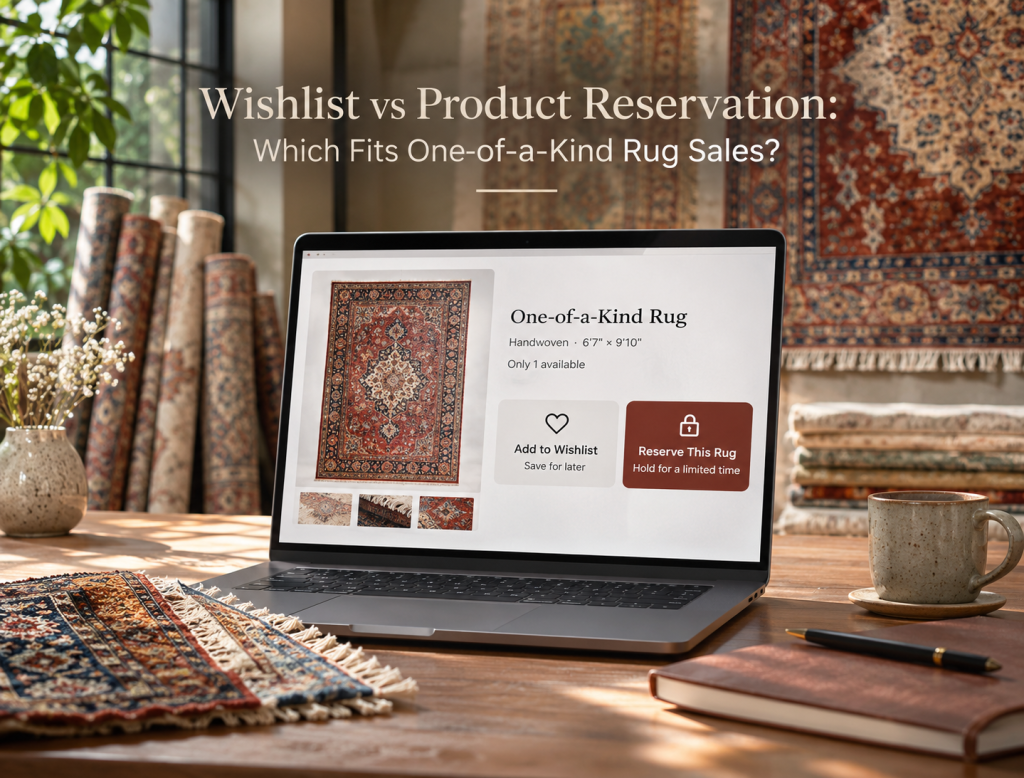
A wishlist and a product reservation can look similar from a customer’s point of view because both allow someone to express interest in a rug without completing the purchase immediately. For a retailer selling one-of-a-kind handmade, antique, vintage, or collectible rugs, however, the two features create very different operational consequences. A wishlist simply lets the customer save a rug for later, while a reservation temporarily changes how that physical rug can be sold. Because there may be only one piece available, the wrong reservation system can block genuine buyers, create conflicts between online and showroom inventory, and make staff unsure whether a rug is actually available.
The better choice depends on what problem the business is trying to solve. If customers mainly need a convenient way to compare several rugs before deciding, a wishlist is usually the safer starting point. If buyers regularly need a short period to confirm measurements, discuss the rug with a designer, arrange financing, or obtain approval from another decision-maker, a carefully controlled reservation feature may be useful. The important point is that a reservation should never be treated as a more advanced version of a wishlist. It is an inventory process and needs clear business rules behind it.
What a Wishlist Does for Rug Shoppers
A wishlist allows a visitor to save products they like without affecting availability. A shopper comparing several Persian rugs can save five options, leave the website, and return later without having to find the same products again. This is particularly useful in rug shopping because customers often need time to compare size, color, style, material, price, and how each option might work with existing furniture.
For one-of-a-kind inventory, the wishlist should make it clear that saving a rug does not reserve it. If another customer purchases the product, the original shopper should not assume that the saved item remains available simply because it still appears in their account. A clear message such as “Saving this rug does not hold inventory” can prevent misunderstanding while preserving the convenience of the feature.
A wishlist also works well with a strong rug website because it supports longer consideration periods without interfering with real-time inventory.
Why Wishlists Are Usually Low Risk
The operational risk of a wishlist is relatively small because the product remains available for normal purchase. Staff do not need to remove the rug from the showroom, ecommerce inventory does not need to be paused, and no timer needs to determine when the product becomes available again.
This makes the feature particularly useful for stores with a large catalog. Hundreds of customers can save the same rug without creating inventory conflicts. The website can also use wishlist behavior as a useful signal of customer interest, especially when one rug is saved repeatedly or when a logged-in customer returns several times to the same shortlist.
The business should still make sure sold products are handled correctly. If a saved rug sells, the wishlist can mark it as sold and recommend similar current inventory rather than simply removing it without explanation. This preserves context for the shopper and can turn the loss of one product into another discovery opportunity.
What a Product Reservation Actually Means
A product reservation is a much stronger commitment. When a one-of-a-kind rug is reserved, the store is telling other shoppers that the product is temporarily unavailable or being held for someone else.
That creates several questions immediately. How long does the reservation last? Does the customer need to pay a deposit? Can showroom staff sell the rug during that period? What happens if the customer does not respond? Can another shopper join a waiting list? Does the website automatically release the rug when the reservation expires?
Unless those questions are answered before the feature is launched, a reservation system can create more problems than it solves.
For unique inventory, the business should treat reservation status with the same seriousness as stock status because the feature directly affects whether another customer can buy the product.
When Reservations Can Be Useful
Reservations can make sense for purchases that require a short decision window. A customer may love a $9,000 antique rug but need to confirm room measurements before purchasing. An interior designer may need client approval. A buyer may need to discuss financing or delivery conditions. A remote customer may be arranging a virtual consultation before committing.
In those situations, a short hold can support the sale by giving the customer enough time to resolve a practical issue without worrying that the rug will disappear immediately.
The key is that the reservation should solve a specific buying barrier. If customers simply want time to think, a wishlist is usually more appropriate because there is no strong reason to remove the rug from sale.
Use Time Limits on Reservations
An open-ended reservation is risky for one-of-a-kind inventory. A customer might reserve a rug on Monday, stop responding, and prevent the store from selling it for several days.
A better system uses a defined period. Depending on the business model, that might be several hours, one business day, or another clearly communicated timeframe.
The exact period should reflect how the store sells. A luxury showroom handling high-value designer projects may reasonably allow more time than a high-volume ecommerce store.
The website should communicate the deadline clearly and release the reservation automatically when possible. Staff should not have to remember manually that a hold expired yesterday.
Decide Whether a Deposit Is Required
A reservation becomes more meaningful when the customer has some level of commitment. For higher-value rugs, the business may choose to require a refundable or non-refundable deposit depending on its policies and applicable consumer rules.
The advantage of a deposit is that it reduces casual reservations. A shopper is less likely to block inventory simply because they are curious.
However, requiring payment adds complexity. The website must explain whether the deposit is applied to the final purchase, when it can be refunded, what happens when the customer cancels, and what happens if the store cannot complete the transaction.
If the business is not prepared to manage those rules clearly, a simple short-term hold without payment may be more practical.
Synchronize Reservations With the Showroom
One of the biggest risks appears when the ecommerce website and physical showroom do not share the same inventory status.
Imagine a rug is reserved online at 2:00 PM. At 2:15 PM, a salesperson in the showroom sells the same physical rug because the reservation did not appear in the store’s system.
The website now has to tell the online customer that a product supposedly reserved for them has been sold.
For a store selling unique inventory, reservation status should therefore reach every sales channel that can sell the same rug. The showroom team, ecommerce system, CRM, and inventory records should all understand that the product is temporarily unavailable.
Use a Waiting List for Reserved Rugs
A reservation does not have to stop the sales process entirely. The website can allow another interested shopper to join a waiting list or request notification if the rug becomes available again.
This is particularly useful for rare or high-value products. If the first reservation expires, the store already has a second potential buyer rather than simply returning the rug to the catalog and hoping someone notices it.
The waiting-list message should remain realistic. It should not imply that the rug will definitely become available again. It simply tells the shopper that the store can contact them if the reservation is released.
Do Not Confuse Reservation With Checkout Inventory Holds
Many ecommerce systems already hold inventory briefly when a shopper enters checkout. That is different from a customer-facing reservation feature.
A checkout hold may last only long enough for the buyer to complete payment. Its purpose is to prevent two people from purchasing the same item simultaneously.
A product reservation may last hours or longer and may happen before the customer has decided to purchase.
The two mechanisms should be designed separately because they solve different problems.
Which Feature Is Better for Most Rug Stores?
For most stores, a wishlist is the better first feature because it supports consideration without interfering with inventory. Customers can compare rugs, return later, share options with family members or designers, and build a shortlist without blocking other buyers.
A reservation becomes useful when the store can identify a recurring reason customers need short-term holds. If designers regularly request 24 hours for client approval, or remote buyers need time to complete a consultation, there may be a genuine business case.
The decision should come from sales behavior rather than a desire to add more ecommerce features.
A Hybrid Approach Can Work Best
Some rug stores may benefit from both features.
The customer can save as many rugs as they want to a wishlist. When they become serious about one particular piece, an eligible product can offer a limited reservation option.
This creates a natural progression:
Browse → Save → Compare → Reserve → Purchase
The reservation button should not necessarily appear for every visitor immediately. It may be offered after a consultation, to trade accounts, or only for products above a certain value.
That approach keeps the low-friction advantages of a wishlist while reserving the stronger inventory commitment for customers who genuinely need it.
Make the Difference Obvious on the Website
If both features exist, their wording needs to be extremely clear.
Save to Wishlist should communicate that the product remains available to other shoppers.
Reserve This Rug should explain that the rug will be temporarily held and should state the duration and any conditions.
Do not use similar icons or ambiguous language that causes customers to believe a saved rug is protected from sale.
Clear interface design can prevent many customer-service problems before they happen.
Track What Happens After a Reservation
A reservation feature should be measured like any other conversion feature.
Track how many reservations lead to completed purchases, how many expire, how long customers typically need, which product types are most frequently reserved, and whether reservations create lost opportunities from other buyers.
If only 10 percent of reservations convert while rugs remain blocked for long periods, the system may be too generous.
If 70 percent of qualified reservations convert within one day, the feature may be helping customers overcome a real purchasing barrier.
A broader rug marketing strategy should evaluate website features by business outcomes rather than simply by how often visitors use them.
Final Thoughts
A wishlist and a product reservation serve different stages of the buying process. A wishlist supports browsing, comparison, and longer consideration without changing inventory. A reservation temporarily limits availability and therefore requires much stronger operational control.
For most one-of-a-kind rug stores, the wishlist is the safer baseline feature. It helps shoppers organize their choices and gives the business useful signals about product interest without preventing another buyer from completing a purchase.
Reservation can add value when customers genuinely need short decision windows, but it should include clear time limits, accurate inventory synchronization, defined deposit rules where applicable, and a process for releasing products automatically.
The best solution may ultimately be a combination of both. Let shoppers save freely, then offer reservation only when the customer’s buying intent and the business process justify temporarily holding a unique rug.
FAQs
Does adding a rug to a wishlist reserve it?
No. A wishlist should normally save the rug for later viewing without changing its availability to other shoppers.
How long should a one-of-a-kind rug reservation last?
There is no universal period. The store should choose a duration that reflects its sales process and gives genuine buyers enough time without unnecessarily blocking inventory.
Should a reservation require a deposit?
It can, particularly for high-value products, but the store needs clear policies explaining how the deposit works and whether it is refundable.
Can both wishlist and reservation features be offered?
Yes. A wishlist can support early browsing while reservations are offered later to customers with stronger purchase intent.
What happens if a reserved rug does not sell?
The website should release the rug automatically or through a clearly managed process, then notify interested customers where a waiting-list system exists.