










Best Font for Rug Website: The Complete Guide for Galleries and eCommerce Stores (2026)
By Raya
Best Font for Rug Website
When I started working with rug businesses over eight years ago, I quickly learned something that most web designers overlook: typography isn’t just about aesthetics. For a rug website, the font you choose can mean the difference between a visitor who lingers, explores, and buys and one who clicks away in seconds.
I’ve designed and optimized websites for Persian rug galleries, Oriental rug dealers, antique carpet collectors, and modern rug eCommerce stores. And I’ve seen firsthand how the wrong font can undermine even the most beautiful rug photography. Today, I’m sharing the exact font strategies I use with my clients strategies that have helped them connect with their ideal buyers and increase conversions.
According to research from the Nielsen Norman Group, users form opinions about a website’s credibility within milliseconds and typography plays a major role in that first impression.
If you’re interested in more insights on rug website optimization, check out my previous post on how to write compelling titles for your rug listings.
Quick Reference: Rug Website Font Recommendations at a Glance
Before we dive deep, here’s a quick comparison table you can reference when choosing fonts for your rug store or gallery website:
Factor | Affordable Rug Stores ($500–$1,500) | Luxury Rug Galleries ($5,000+) |
Target Audience | Younger buyers (under 40) | Collectors, designers (45+) |
Font Style | Modern Sans-Serif | Classic Serif |
Best Google Fonts | Inter, Raleway, Roboto Condensed, Manrope, Fira Sans | Playfair Display, Libre Baskerville, Merriweather, GFS Didot |
Font Weight | ExtraLight (200) – Regular (400) | Regular (400) – Medium (500) |
H1 Size | 26px | 36–44px |
H2 Size | 24px | 28–32px |
Body Text Size | 20px | 20–22px |
Brand Feel | Fresh, approachable, modern | Elegant, timeless, luxurious |
Now let’s explore each recommendation in detail so you can make the best typography choices for your specific rug business.
Why Font Choice Matters More for Rug Websites Than You Think
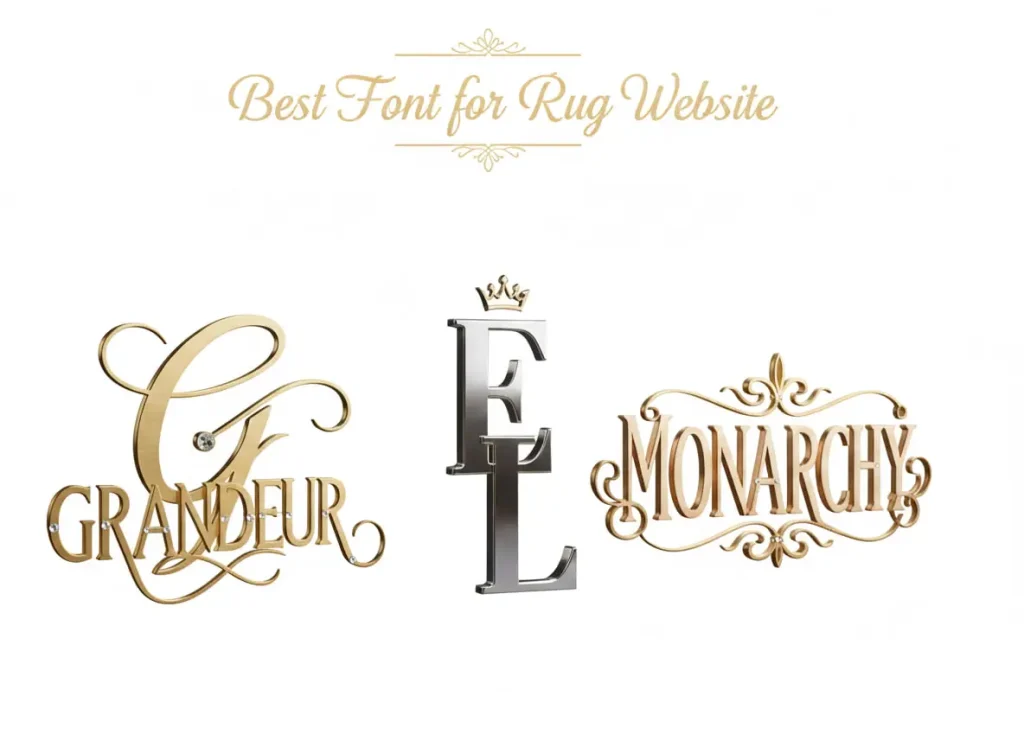
Selling rugs online is fundamentally different from selling most other products. A handwoven Persian rug isn’t an impulse buy, it’s an investment. Whether your customers are spending $800 on a modern area rug or $15,000 on a vintage Tabriz, they need to trust your brand before they click “add to cart.”
Typography is one of the first subconscious signals your website sends. The wrong font can make a $10,000 antique rug feel cheap. The right font can make even an entry-level piece feel like a curated treasure.
Research published by Google Fonts confirms that font selection directly impacts user perception of brand quality and trustworthiness critical factors when selling high-value items like handmade rugs.
But here’s what most designers miss:
Your font choice must match your audience, not just your product.
Let me explain what I mean.
Understanding Your Rug Audience: The Foundation of Smart Typography
Before choosing a single font, you need to answer two questions:
- What is your average price point?
- Who is your primary customer?
These answers will determine everything about your website’s visual language, including typography for your rug store web design.
In my experience working with rug gallery website design projects, businesses typically fall into two categories:
- Affordable rug retailers targeting younger buyers (under 40) looking for stylish rugs in the $500–$1,500 range
- High-end rug galleries serving collectors, interior designers, and affluent buyers (often 45+) who invest $5,000 or more per piece
Each audience has different expectations, browsing behaviors, and even different visual needs. Let’s break down the best font strategies for each.
Best Google Fonts for Affordable Rug Websites
If your rug store primarily sells affordable, modern rugs think contemporary designs, machine-made pieces, or trending Moroccan-style rugs your audience is likely younger, digitally savvy, and accustomed to clean, minimalist web design.
These customers don’t want a website that feels like a museum. They want something that feels fresh, approachable, and easy to navigate on both desktop and mobile devices.
Recommended Sans-Serif Fonts for Modern Rug Stores
For this audience, I always recommend clean, modern sans-serif fonts from Google Fonts (free and optimized for web performance). Here are my top picks based on real client projects:
- Raleway – Elegant yet modern, perfect for rug stores that want sophistication without stuffiness
- Inter – Extremely readable, optimized for screens, and universally appealing
- Roboto Condensed – Space-efficient and contemporary, ideal for product-heavy pages
- Manrope – A newer font with personality, great for brands that want to stand out
- Fira Sans – Clean and professional, works beautifully for longer product descriptions
Optimal Font Weights and Sizes for Modern Rug eCommerce
For a modern, affordable rug website, lighter font weights create a clean, airy feel. I typically recommend:
- Font weight: Extra Light (200), Light (300), or Regular (400)
- H1 (Main Page Titles): 26px
- H2 (Section Titles): 24px
- Body Text: 20px
These sizes maintain readability while keeping the design feeling modern and uncluttered exactly what younger rug buyers expect from contemporary rug store web design.
Best Fonts for High-End Rug Galleries and Antique Rug Dealers
Now, let’s talk about the rug businesses I work with most often: galleries and dealers specializing in antique Persian rugs, vintage Oriental carpets, and investment-grade textiles.
This is where typography for antique rug dealers becomes truly critical.
Your primary audience of collectors, interior designers, and affluent buyers expects a certain level of refinement. These customers are often over 45, have been collecting for years, and have seen thousands of rug websites. They can instantly tell the difference between a professional gallery and an amateur operation.
Why Readability Is Non-Negotiable for Luxury Rug Websites
Here’s something I’ve learned from years of working with gallery owners: many of your best customers, the ones ready to spend $10,000 or more, are in their 50s, 60s, or older. Many wear reading glasses. Some have age-related vision changes.
According to Web Content Accessibility Guidelines (WCAG), proper font sizing and spacing are essential for users with visual impairments, a demographic that significantly overlaps with luxury rug buyers.
If your font is too small, too thin, or too decorative, these customers will struggle to read your descriptions. And when someone is considering a $15,000 antique Tabriz, they want to read every detail about its origin, condition, and provenance.
Readability isn’t just a nice-to-have. It’s essential for converting high-value sales.
Recommended Serif Fonts for Luxury Rug Galleries
For high-end rug websites, I recommend classic serif fonts that convey heritage, craftsmanship, and timeless elegance:
- Playfair Display – Sophisticated and distinctive, perfect for gallery names and headlines
- Libre Baskerville – A classic book font that’s highly readable and refined
- Libre Caslon Text – Traditional elegance with excellent legibility
- GFS Didot – High-fashion aesthetic, ideal for galleries with a curated, editorial feel
- Merriweather – Designed specifically for screen readability, a modern serif that feels classic
Optimal Font Sizes for Gallery Websites Targeting Older Visitors
Because readability is paramount especially for font size for older website visitors, I recommend larger sizes for luxury rug websites:
- H1 (Gallery Name, Collection Titles): 36–44px
- H2 (Section Headers): 28–32px
- H3 (Rug Names, Subheadings): 24–26px
- Body Text: 20–22px
These larger sizes ensure that your most valuable customers can comfortably browse your collection, read provenance details, and make confident purchasing decisions.
Typography Psychology: What Your Font Communicates to Rug Buyers
Beyond readability, fonts communicate subtle psychological messages that influence how customers perceive your brand. A study from MIT found that fonts significantly impact emotional response and perceived quality of content.
Serif fonts (Playfair Display, Libre Baskerville) communicate tradition, heritage, trust, and established expertise. They’re ideal for galleries selling antique Persian carpets and vintage Oriental pieces.
Sans-serif fonts (Inter, Raleway) communicate modernity, accessibility, and straightforward professionalism. They work well for contemporary rug retailers and eCommerce-focused stores selling modern area rugs.
Your font should match the story your rugs tell. A gallery specializing in 19th-century Persian carpets should feel different from a store selling trendy Moroccan-style rugs and typography is one of the most powerful ways to create that distinction in your rug gallery website design.
Common Font Mistakes I See on Rug Websites (And How to Avoid Them)
After reviewing hundreds of rug websites over eight years, I’ve identified the most common typography mistakes that hurt conversions:
- Using decorative or script fonts for body text. These are nearly impossible to read in paragraphs and make your site feel unprofessional. Save decorative fonts for logos only.
- Font sizes that are too small. Body text under 16px is a conversion killer, especially for older audiences. I recommend a minimum of 20px for rug websites.
- Too many different fonts. Stick to two fonts maximum one for headings, one for body text. More than that creates visual chaos and slows page loading.
- Poor contrast between text and background. Light gray text on a white background might look “elegant,” but it’s frustrating to read and fails WCAG accessibility standards.
- Ignoring mobile typography. Over 60% of rug website traffic comes from mobile devices. Your fonts need to be tested on phones and tablets. What looks great on desktop can be unreadable on mobile.
- Not using web-safe or Google Fonts. Custom fonts can slow your site and display incorrectly on some devices. Stick to Google Fonts for reliability and speed.
Best Font Pairings for Rug Websites
Choosing the right combination of heading and body fonts is an art. Here are my proven font pairings for rug businesses:
For Luxury Rug Galleries:
- Playfair Display (headings) + Merriweather (body) – Classic elegance
- Libre Baskerville (headings) + Georgia (body) – Timeless sophistication
- GFS Didot (headings) + Libre Caslon Text (body) – Editorial luxury
For Modern Rug Stores:
- Raleway (headings) + Inter (body) – Clean and professional
- Manrope (headings) + Fira Sans (body) – Contemporary and friendly
- Roboto Condensed (headings) + Roboto (body) – Minimal and efficient
Key Takeaways: Choosing the Perfect Font for Your Rug Website
Let me summarize the key principles I use when advising my rug industry clients on typography:
- Know your audience first. Your font should match your customer’s expectations, not just your personal taste.
- Match typography to price point. Affordable rugs = modern sans-serif. Luxury rugs = classic serif.
- Prioritize readability, especially for high-end galleries. Your best customers may be older and need larger, clearer fonts.
- Use no more than two fonts. One for headings, one for body text. Keep it simple and fast-loading.
- Test on mobile devices. More than 60% of your traffic is probably on smartphones. Make sure your fonts work there.
- Use Google Fonts for best performance. They’re free, fast, and display consistently across all devices.
Frequently Asked Questions About Rug Website Fonts
What is the best font for a rug eCommerce website?
The best font depends on your target market. For affordable, modern rugs targeting younger buyers, use clean sans-serif fonts like Inter, Raleway, or Roboto Condensed. For luxury rug galleries targeting collectors and designers, use classic serif fonts like Playfair Display or Libre Baskerville. Always prioritize readability with font sizes of at least 20px for body text.
Why do high-end rug galleries need larger font sizes?
High-end rug galleries typically serve customers aged 45 and older, many of whom wear reading glasses or have age-related vision changes. Larger font sizes (20–22px for body text, 36–44px for headlines) ensure these valuable customers can comfortably read rug descriptions, provenance details, and pricing information=increasing trust and conversion rates.
Should I use serif or sans-serif fonts for my Persian rug website?
For authentic Persian rug galleries selling antique and vintage pieces, serif fonts are the better choice. Fonts like Playfair Display, Libre Baskerville, and GFS Didot communicate heritage, tradition, and established expertise qualities that resonate with collectors and serious buyers. Reserve sans-serif fonts for contemporary rug stores with modern aesthetics.
How many fonts should I use on my rug website?
Use a maximum of two fonts on your rug website: one for headings and one for body text. Using more than two fonts creates visual cluster, slows page loading, and makes your site look unprofessional. Choose fonts that complement each other for example, pair Playfair Display headlines with Merriweather body text for a luxurious gallery feel.
What font size should I use for rug product descriptions?
For rug product descriptions, use a minimum of 20px font size. For high-end galleries targeting older collectors, consider 22px. Never use body text smaller than 16px, as this significantly reduces readability and can hurt conversion rates. Remember that customers need to read detailed descriptions about materials, dimensions, origin, and condition before making a purchase.
What are the best Google Fonts for a rug store website?
For luxury rug galleries, the best Google Fonts are Playfair Display, Libre Baskerville, Merriweather, and GFS Didot. For modern rug eCommerce stores, use Inter, Raleway, Roboto Condensed, Manrope, or Fira Sans. All these fonts are free, load quickly, and display consistently across devices and browsers.
How does font choice affect rug website SEO and conversions?
Font choice indirectly affects SEO through user experience metrics. Readable fonts reduce bounce rates and increase time on page both positive ranking signals. Additionally, proper typography improves conversion rates by building trust and making it easier for customers to read product details. Google Fonts also load faster than custom fonts, improving Core Web Vitals scores.
What font weight works best for rug website body text?
For luxury rug galleries, use Regular (400) or Medium (500) font weight for body text to ensure readability. For modern, affordable rug stores, you can use lighter weights like Light (300) or Regular (400) for a cleaner, airier feel. Avoid Extra Light (200) for body text as it can be difficult to read, especially for older visitors.
Ready to Transform Your Rug Website?
Typography is just one piece of the puzzle. A truly effective rug website combines the right fonts with strategic design, SEO optimization, compelling photography, and a deep understanding of the rug market.
At Danabak, we specialize exclusively in digital marketing for the rug industry. We’ve helped Persian rug galleries, Oriental rug dealers, and modern rug eCommerce stores across the country attract more qualified buyers and increase sales.
Our services include:
- Rug website design and development
- SEO for rug businesses
- Google Ads management
- Social media marketing for rug stores
Want a professional review of your current rug website? We offer a free rug marketing audit where we’ll analyze your typography, design, SEO, and conversion potential and show you exactly where you’re leaving money on the table.
