


Here’s the thing most rug dealers are approaching social media completely wrong. I’ve worked with dozens of Persian and Oriental rug businesses over the past decade, and I keep seeing the same mistakes.
They post a few product shots on Facebook. Maybe throw some money at generic ads. Then wonder why they’re not seeing results while their competitors are booking private appointments left and right.
Look, the rug business is different from selling furniture or home décor. Your customers aren’t impulse buyers scrolling through Amazon. They’re making $5,000 to $50,000 decisions. They want to see the intricate knotwork up close, feel the silk threads, understand the provenance.
The challenge isn’t getting eyeballs it’s building trust and desire before they walk into your showroom. Smart rug dealers are using social media to pre-qualify serious buyers, not just chase vanity metrics like likes and follows.
Platform Selection Strategy
Forget TikTok dances and LinkedIn thought leadership. For rug businesses, three platforms dominate: Facebook, Instagram, and Pinterest. But here’s what most dealers get wrong they try to be everywhere instead of mastering one platform first.
Facebook remains the workhorse for rug dealers. The demographic skews older (your target buyers), the ad targeting is surgical, and you can actually track phone calls and showroom visits. I’ve seen Persian rug galleries generate $300,000+ in revenue from a $15,000 annual Facebook ad spend.
Instagram works for storytelling and lifestyle positioning. Think room reveals, close-up texture shots, and behind-the-scenes content from buying trips to Iran or Turkey. The visual-first format showcases your inventory better than any other platform.
Pinterest? Don’t sleep on it. Interior designers and high-net-worth homeowners live on Pinterest. A single pin of a stunning Kashan rug in a luxury living room can drive traffic for months.
My recommendation: Master Facebook ads first. Once you’re profitably scaling there, layer in Instagram content, then Pinterest for long-term organic reach.
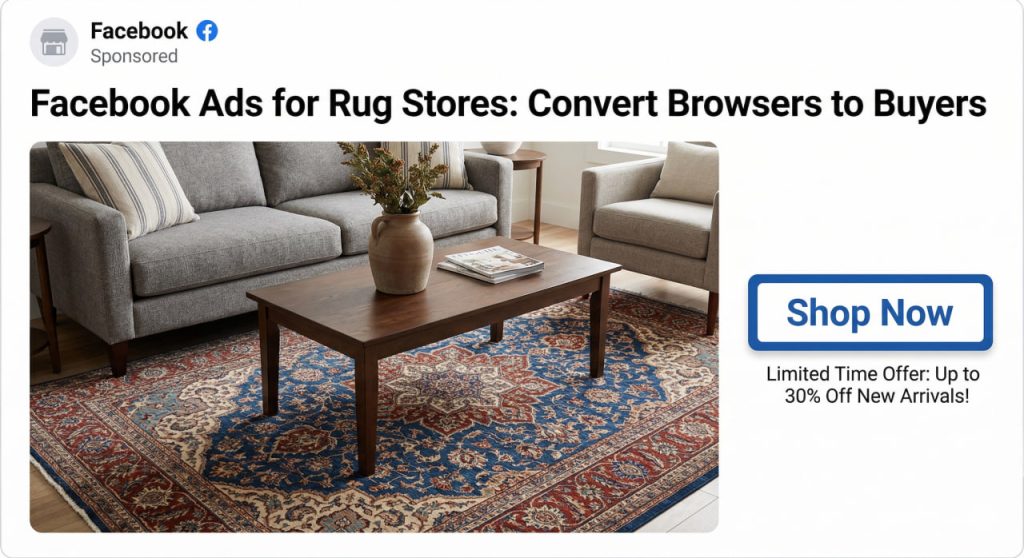
Facebook Ads That Convert (Facebook Ads for Rug Stores)
Most rug store Facebook ads are disasters. Generic carousel ads with no context. “Sale this weekend” posts that scream desperation. Broad targeting that wastes money on college kids who can barely afford Ikea.
Here’s what actually works. Start with video ads showcasing your best pieces. Not a slideshow actual video. Show the rug being unrolled. Zoom in on the knots. Display it in different lighting conditions.
Your video hook needs to be specific: “This 200-year-old Tabriz took 18 months to hand-knot” or “See why silk Qum rugs change color in different light.” Generic hooks like “Beautiful rugs for your home” get ignored.
For targeting, I use what I call the “Affluent Homeowner Stack.” Start with these demographics: Ages 35-65, household income $100k+, homeowners, interested in interior design. Then layer in behavioral targeting: luxury shoppers, frequent travelers to the Middle East, antique collectors.
But here’s the secret sauce create a custom audience from your existing customer list. Facebook will find people who look similar to your best buyers. I’ve seen this audience segment deliver cost-per-lead that’s 60% lower than broad targeting.
Your ad creative should follow the A.I.D.A. framework adapted for luxury goods:
- Attention: Lead with heritage or rarity (“One of only 12 known examples…”)
- Interest: Explain the craftsmanship story
- Desire: Show it in an aspirational room setting
- Action: Offer a private viewing, not a generic “shop now”
Don’t send Facebook traffic to your homepage. Create dedicated landing pages for each rug category. Social media campaigns that drive to specific product categories convert 3x better than homepage traffic.
Instagram Visual Mastery
Instagram isn’t just Facebook’s younger sibling it requires a completely different approach. The platform rewards consistent visual storytelling, not sales pitches.
Your Instagram content should follow the 80/20 rule. Eighty percent educational or lifestyle content, twenty percent direct promotion. Share the story behind each piece. Post time-lapse videos of rug restoration. Show your buying trips to Isfahan or Tabriz.
I worked with a Portland rug gallery that transformed their Instagram by focusing on “rug education.” They posted weekly content explaining different weaving techniques, regional styles, and care tips. Their follower count grew from 800 to 12,000 in eight months. More importantly, 40% of their showroom visitors mentioned finding them through Instagram educational content.
For hashtag strategy, mix broad appeal tags (#persianrugs #orientalrugs) with niche collector tags (#tabrizrugs #silkqum #antiquecarpets). Research what tags your competitors use, but don’t copy them exactly find gaps in underused but relevant hashtags.
Instagram Stories are perfect for behind-the-scenes content. Show rugs being unpacked from shipments. Document the appraisal process. Share customer testimonials and room reveals.
Pro tip: Use Instagram’s “Save” feature strategically. Create highlight reels for different rug regions, price points, and room styles. This turns your profile into a browsable catalog that serious buyers can explore at their own pace.
Content That Sells Rugs
Content marketing for rug dealers isn’t about churning out blog posts nobody reads. It’s about creating media that addresses the specific concerns of someone making a significant luxury purchase.
Your audience has three main concerns: authenticity, value, and fit. Address these directly through your content:
Authenticity Content:
- Detailed provenance stories for significant pieces
- Videos explaining how to identify machine-made vs. hand-knotted
- Documentation of your buying relationships in weaving regions
Value Content:
- Market trend analysis (“Why Oushak rugs have appreciated 40% since 2019”)
- Care guides that preserve investment value
- Comparison content (“Isfahan vs. Kashan: Which style fits your home?”)
Fit Content:
- Room visualization tools or mockups
- Size guides with actual measurements in real rooms
- Style guides matching rugs to different design aesthetics
The smell of lanolin from fresh wool shipments. The satisfying thud when a quality rug hits the floor during unrolling. These sensory details matter more than you think they signal authenticity to serious collectors who’ve been handling textiles for years.
Video content performs exceptionally well for rug businesses. Facebook videos showcasing rug details get 3-5x more engagement than static images. But here’s what most dealers miss optimize your videos for sound-off viewing. Add captions, use visual text overlays, and make the story clear even without audio.
Advanced Targeting Techniques
Generic demographic targeting wastes money in the rug business. You need precision targeting that reaches serious buyers, not window shoppers.
Beyond basic affluent demographics, layer in interest-based targeting:
- People interested in specific luxury brands (Hermès, Tiffany, Restoration Hardware)
- Travel patterns to rug-producing regions (Turkey, Iran, India, Afghanistan)
- High-end home publications (Architectural Digest, Elle Decor)
- Art and antique collecting interests
But the real goldmine is behavioral targeting. Facebook tracks purchasing behavior, and you can target people who regularly buy luxury goods online. This audience segment typically has 2-3x higher conversion rates than interest-based targeting.
Create lookalike audiences from different customer segments:
- High-value customers (purchases over $10,000)
- Interior designer customers
- Repeat buyers
- Customers who buy specific rug types (silk, antique, contemporary)
For local targeting, don’t just target your city. Expand to affluent suburbs within a 50-mile radius. Serious rug buyers will drive for the right piece. I’ve seen customers travel 200+ miles for a specific Heriz or Mahal rug they discovered through social media.
Retargeting is crucial for rug businesses because of the long consideration period. Someone might visit your site, think about it for weeks, then return ready to buy. Set up retargeting campaigns with different messaging based on pages visited:
- Product browsers: “Still thinking about that Isfahan?”
- About page visitors: Focus on expertise and trust signals
- Care guide readers: Position as the expert for rug maintenance and restoration
Digital Showroom Branding
Your social media presence should extend your physical showroom experience online. This means consistent visual branding, tone of voice, and customer experience standards.
Most rug dealers post inconsistent content that dilutes their brand positioning. One day it’s a casual iPhone photo, the next it’s a professional lifestyle shot. This inconsistency undermines the luxury positioning essential for high-ticket rug sales.
Develop visual brand guidelines for social media:
- Consistent lighting and photography style
- Branded templates for educational content
- Color palette that reflects your showroom aesthetic
- Professional imagery that matches your in-store experience
Your tone of voice should position you as the expert guide, not the pushy salesperson. Think museum curator explaining a valuable piece, not car dealer pushing inventory.
Social proof is everything in the rug business. Share customer testimonials, but make them specific: “Sarah transformed her Park Avenue apartment with this 19th century Sultanabad.” Include room photos when possible.
Here’s what most rug dealers miss: Social media should drive appointments, not just website traffic. Your CTA shouldn’t be “Shop Now” it should be “Schedule a Private Viewing” or “Book a Consultation.”
The gentle whoosh of silk threads catching light as you rotate a Qum rug. The distinctive clicking sound quality knots make when you run your fingers across them. These details separate serious dealers from commodity sellers, and your social media should capture this expertise.
For rug stores transitioning from traditional advertising to digital, start with Facebook’s Local Awareness campaigns. These target people within a specific radius of your showroom and work particularly well for driving foot traffic during special events or new collection arrivals.
Real Results We’ve Delivered
I worked with a family-owned Persian rug gallery in Charlotte that was struggling with digital marketing. They’d been relying on word-of-mouth and traditional print ads for thirty years. Online competition was eating into their market share.
Their first Facebook campaign was a disaster. Generic “Beautiful Rugs” messaging, no clear targeting, and ads that sent traffic to their outdated homepage. They spent $3,000 and generated exactly zero qualified leads.
We completely restructured their approach:
- Created video ads showcasing their most valuable pieces with detailed provenance stories
- Developed lookalike audiences based on their best customers
- Built dedicated landing pages for different rug categories
- Implemented phone call tracking to measure showroom visits
Within six months, their Facebook advertising generated $180,000 in verified sales. Their cost per lead dropped from an unmeasurable disaster to $45 per qualified inquiry. More importantly, they were attracting serious collectors, not tire-kickers.
The breakthrough came when we started featuring their buying trips to Iran and Turkey. Customers loved seeing the authentic relationships with weavers and the selection process in overseas markets. These behind-the-scenes videos generated the highest engagement rates and drove the most showroom appointments.
Another success story: A contemporary rug gallery in Denver was struggling to differentiate from furniture stores selling mass-produced “Persian-style” rugs. We positioned them as the authentic source through educational content marketing.
Their Instagram content focused on teaching followers how to identify hand-knotted vs. machine-made rugs. They shared close-up videos showing knot density, backing quality, and fringe construction. This educational approach established them as the expert resource in their market.
Result: 60% increase in showroom traffic over 12 months, with visitors specifically mentioning their educational content as the reason they chose this gallery over competitors.
[dcp_cta_banner style=”inline”]
How We Transformed a Traditional Rug Gallery
The gallery’s owner had been in business for 25 years but was losing customers to online retailers and furniture stores selling machine-made “Persian-style” rugs at fraction of the price.
Their original social media approach was posting random rug photos with generic captions like “Beautiful rugs for your home!” They were getting maybe 5 likes per post and zero inquiries.
We implemented what I call the “Collector Education Strategy”:
- Weekly educational videos explaining regional weaving traditions
- Before/after restoration content showing their expertise
- Customer spotlight features in their actual homes
- Live Q&A sessions about rug care and collecting
The transformation wasn’t immediate luxury buyers need time to develop trust. But by month 4, we were seeing serious results:
- Average order value increased from $3,200 to $7,800
- 40% of new customers mentioned social media education content during sales conversations
- Generated 23 appointments from Facebook ads in Q4 (their busiest season)
The owner told me: “I never thought social media would work for our business. But when a customer walks in asking about the Heriz rug they saw in our Instagram story, that’s when you know it’s working.”
Frequently Asked Questions
What are the best social media platforms for marketing Persian and Oriental rugs?
Facebook is your primary platform for rug dealers. The demographic skews older and more affluent, the ad targeting is precise, and you can track actual phone calls and showroom visits. Instagram works well for storytelling and showcasing craftsmanship details. Pinterest provides long-term organic reach among interior designers and luxury homeowners. Skip TikTok unless you’re targeting a much younger demographic.
How can rug stores use Instagram to promote Oriental rugs?
Focus on education over direct selling. Share the stories behind each piece, document your buying trips, and create content that teaches followers about different weaving traditions. Use the 80/20 rule 80% educational content, 20% promotional. Instagram Stories are perfect for behind-the-scenes content like unpacking new shipments or showing the restoration process.
Are Facebook ads effective for rug stores?
Absolutely, when done correctly. The key is precise targeting of affluent homeowners and creating video content that showcases craftsmanship. Generic ads fail, but specific campaigns highlighting provenance, rarity, or craftsmanship can generate significant ROI. I’ve seen rug galleries achieve $300,000+ in revenue from $15,000 annual Facebook ad spend.
What type of content works best for a rug business on social media?
Educational content that addresses authenticity, value, and fit concerns. Share provenance stories, create videos showing hand-knotting techniques, document your relationships with weavers overseas, and provide room styling guidance. Behind-the-scenes content from buying trips performs exceptionally well. Avoid generic “beautiful rugs” messaging be specific about regions, techniques, and historical significance.
How can social media improve a rug showroom’s branding?
Social media should extend your showroom experience online through consistent visual branding and expert positioning. Share customer testimonials with specific details, document your expertise through educational content, and maintain professional photography standards that match your in-store experience. Focus on driving appointments rather than just website traffic position yourself as the curator, not the commodity seller.
[dcp_cta_banner style=”inline”]
Key Takeaways
Look, social media marketing for rug dealers isn’t about chasing the latest trends or copying what works for fast fashion. Your customers are making significant investments in pieces they’ll treasure for decades.
Your social media should reflect that relationship. Focus on education, authenticity, and building trust over time. Use Facebook for precise targeting and lead generation. Use Instagram for storytelling and craftsmanship showcase. Use Pinterest for long-term organic reach.
Most importantly, remember that social media is a tool to drive qualified appointments, not just website traffic. A single serious collector who discovers your gallery through social media can be worth more than thousands of casual browsers.
If you’re ready to transform your rug business through strategic social media marketing, we’d love to help. At Danabak, we specialize in luxury retail marketing that drives qualified leads, not vanity metrics.
Get in Touch Now! Call us at (980) 333-3770 to discuss how we can help your rug gallery attract serious collectors through strategic social media marketing.
[dcp_cta_banner style=”inline”]
[dcp_author_box id=”1″]
[dcp_related_posts]
[dcp_feedback]