


TL;DR – Quick Answers:
- Which platform works best for rug stores? Instagram drives showroom visits, Facebook converts high-intent buyers aged 35-65.
- How do rug stores get Instagram customers? Room staging videos showing rugs in actual homes, not isolated product shots.
- What rug content performs best? Before/after room transformations and close-up texture videos that let viewers “feel” the quality.
- Do Facebook ads work for luxury rugs? Yes, but only with lookalike audiences based on existing high-value customers, not broad targeting.
The Visual Storytelling Framework for Luxury Rugs
Persian and Oriental rugs aren’t just floor coverings they’re **investment pieces with stories**. But most rug dealers post photos that look like they came straight from a wholesale catalog.
I call this the **Heritage-to-Home Framework**. Every piece of content should connect three dots: the rug’s cultural heritage, its craftsmanship details, and how it transforms a real living space. This isn’t about posting more content it’s about posting content that tells a complete story.
💡 Key Insight: High-end rug buyers don’t just want to see the rug they want to envision the lifestyle it represents. Show the story, not just the product.
The most successful rug dealers I work with at Danabak follow a specific visual pattern: **wide shot of the room, medium shot of the rug in context, close-up of the texture and weave**. This mimics exactly how customers examine rugs in person they step back to see the overall impact, then lean in to feel the quality.
Here’s what actually works: Film a 30-second video walking around a staged room. Start wide, move to the rug, then get close enough that viewers can see individual knots. Add text overlay explaining the origin story “Hand-knotted in Isfahan, 400 knots per square inch, dyed with natural indigo.” That’s not just a product demo, that’s digital craftsmanship education.
Instagram: Where Persian Rugs Actually Sell
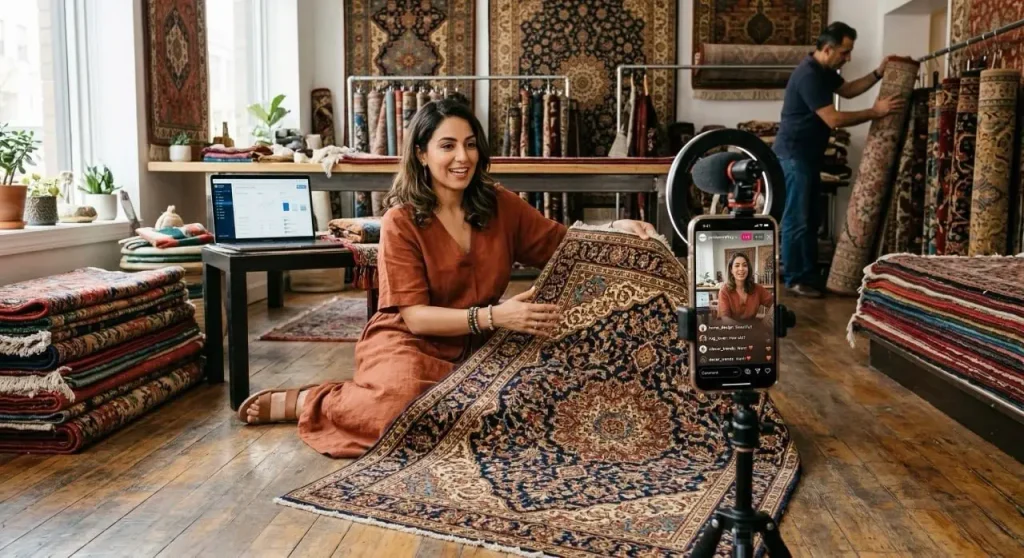
Instagram isn’t just about pretty pictures anymore it’s about **creating desire through authentic staging**. The rug stores that dominate Instagram do one thing differently: they show rugs in real homes, not sterile showrooms.
Partner with local interior designers and offer rug loans for staging. When they post room reveals, you get tagged in posts that reach your exact target audience homeowners who hire designers and invest in quality furnishings. One client increased showroom visits by 180% using this strategy because the social proof is undeniable.
✅ Instagram Content Checklist:
- □ Post room transformations showing before/after with your rugs
- □ Share close-up texture videos with detailed captions about craftsmanship
- □ Use Instagram Stories to show behind-the-scenes rug selection process
- □ Tag local interior designers and encourage user-generated content
- □ Create highlight reels by rug origin (Persian, Turkish, Moroccan)
The secret weapon? **Instagram Reels showing the rug selection process**. Film customers walking through your showroom, testing different rugs in a room mockup. People love seeing the decision making process, and it positions you as the expert guide rather than just another furniture store.
Don’t forget the technical details that rug enthusiasts care about. In your captions, always include: origin region, knot count, age (for antiques), size, and primary dye sources. The people buying $5,000+ rugs want this information, and including it signals expertise.
Facebook Ads That Convert High-End Rug Buyers
Facebook ads for luxury rugs are tricky because the audience is narrow and sophisticated. **Broad targeting fails spectacularly** I’ve seen rug stores waste thousands targeting “home decor interested” people who shop at Target, not rug galleries.
The strategy that works: **lookalike audiences based on your highest-value existing customers**. Upload your customer list (people who spent $2,000+) and let Facebook find similar users. These audiences convert 3-4x better than interest-based targeting because Facebook identifies subtle behavioral patterns you’d never think to target.
⚠️ Common Mistake: Running rug ads with price points in the creative. High-end buyers don’t want to see “$3,999” in ads it feels pushy. Lead with beauty and craftsmanship, discuss investment later.
Your ad creative should focus on **room transformation and lifestyle aspiration**. Show the same room with a basic rug versus your Persian piece. The contrast is dramatic and immediately communicates value without being salesy.
Carousel ads work particularly well for rug galleries. Start with the full room, then showcase detail shots of the same rug. Each card tells part of the story: heritage, craftsmanship, installation, final result. This mimics the in-person shopping experience where customers examine rugs from multiple angles.
Need help setting up Facebook ads that actually convert? Get in Touch Now!
The 80/20 Content Calendar System
Most rug stores post randomly when they remember to. **Consistency beats perfection** in social media, but you need a system that doesn’t eat your entire week.
I developed the **80/20 Rug Content System**: 80% of your content follows templates, 20% is spontaneous behind-the-scenes content. This keeps your feed active without overwhelming your schedule.
Monday: **Heritage Monday** Share the story behind a specific rug region or weaving technique. Wednesday: **Room Transformation** Before/after shots or styling tips. Friday: **Craftsmanship Close-up** Detail videos showing knot work, dyes, or restoration process.
The 20% spontaneous content is what builds real connection. Someone just picked up a custom order? Film their reaction. A new shipment arrived? Show the unpacking process. Artisan visit from overseas? Document everything. This content feels authentic because it is authentic.
💪 Pro Tip: Batch your template content. Spend one afternoon per month shooting multiple Heritage Monday posts. Store them in your phone and schedule with Later or Hootsuite. This frees up daily time for spontaneous content.
Digital Showroom Branding That Builds Trust
Your social media profiles are your **digital showroom entrance**. People research rug dealers extensively before visiting because these are major purchases. Your branding needs to convey expertise, authenticity, and established reputation immediately.
Your Instagram bio should include: years in business, specific expertise (“Persian & Turkish antiques”), location, and a clear call-to-action. Avoid generic phrases like “Beautiful rugs for your home.” Instead: “Hand-selected Persian rugs since 1985. Isfahan specialists. Showroom visits by appointment.”
Highlight reels are crucial for rug dealers. Create separate highlights for: “Our Story” (family history, expertise), “Restoration” (before/after repair work), “Custom Orders” (selection and installation process), and “Customer Homes” (rugs in actual spaces). This organizes your expertise in a way that builds confidence with serious buyers.
The most successful rug dealers also showcase their **authentication and certification processes**. Post photos of certificates, explain how you verify antique pieces, show the tools you use for quality assessment. This addresses the biggest fear high-end rug buyers have: authenticity.
Engagement Tactics That Generate Real Inquiries
Social media engagement for rug dealers isn’t about collecting likes it’s about **generating qualified showroom visits**. The tactics that work focus on education and consultation rather than pushing products.
Start “Rug Education Tuesdays” where you answer common questions: “How do I know if a Persian rug is authentic?” “What’s the difference between hand-knotted and hand-tufted?” “How do I clean wine stains without damage?” These posts position you as the expert and often generate dozens of comments with specific questions.
📋 Step-by-Step Engagement Process:
- Step 1: Post educational content with “What questions do you have?” call-to-action
- Step 2: Respond to every comment within 4 hours with detailed, helpful answers
- Step 3: For complex questions, invite them to DM or schedule a consultation
- Step 4: Follow up with commenters via direct message with additional resources
- Step 5: Track which education topics generate the most showroom visits
User-generated content is gold for rug dealers. **Encourage customers to post their rugs in their homes** with a branded hashtag. Offer a small incentive (professional rug cleaning) for posts you can reshare. This creates social proof that’s more valuable than any professional photography.
The key is making engagement feel like consultation, not sales. When someone comments asking about size recommendations, don’t just answer ask follow-up questions about their room layout, existing furniture, lifestyle. This demonstrates the consultation experience they’ll get in your showroom.
Measuring What Actually Matters
Vanity metrics like followers and likes don’t pay the bills. For rug dealers, success metrics should connect directly to **showroom visits and sales inquiries**.
Track these numbers monthly: showroom appointments booked through social media, direct messages asking about specific rugs, tagged photos in customer homes, and most importantly actual sales attributed to social media discovery. One client realized their Tuesday education posts generated 60% more qualified inquiries than their product photos.
**Instagram Insights reveals which content drives profile visits** and website clicks. Sort your posts by profile visits rather than likes. The posts that make people want to learn more about your business are your content gold mine.
Set up Google Analytics goals for social media traffic to your website. Track not just visits, but time on site and pages viewed. High-quality rug shoppers spend significant time researching if your social traffic bounces quickly, your content isn’t attracting serious buyers.
Want help tracking the metrics that actually grow your rug business? Get in Touch Now!
Frequently Asked Questions
Which social media platform works best for Persian rug stores?
Instagram and Facebook serve different purposes, and successful rug dealers use both strategically. Instagram drives discovery and showroom visits, while Facebook converts serious buyers.
Instagram works because rug buying is highly visual. The platform’s focus on beautiful imagery lets you showcase craftsmanship details, room transformations, and lifestyle aspirations. I’ve found that Instagram followers are more likely to visit showrooms because they’re in the inspiration and discovery phase of their buying journey.
Facebook targets the decision-making phase better. The audience skews older (35-65), which matches high-end rug buyers perfectly. Facebook’s detailed targeting options let you reach homeowners, interior design enthusiasts, and people with high disposable income. Plus, Facebook Messenger conversations tend to be more serious inquiries than Instagram DMs.
My recommendation? Use Instagram to build awareness and showcase your expertise, then retarget engaged users with Facebook ads that drive appointments. This two-platform approach captures buyers at different stages of their journey.
How do rug stores get customers from Instagram?
The key is showing rugs in context, not isolation. Room staging videos showing your rugs transforming actual living spaces consistently outperform product-only photos by 300-400% in terms of generating inquiries.
Partner with local interior designers and home stagers. Offer rug loans for their projects in exchange for social media mentions and tags. When they post room reveals featuring your rugs, you’re reaching homeowners who already invest in professional design services your ideal customers.
Create educational content that positions you as the expert. Posts explaining rug authenticity, care instructions, and investment value generate more qualified leads than pure product showcases. People researching $3,000+ rugs want to understand what they’re buying, and educational content builds the trust necessary for high-value purchases.
Use Instagram Stories to show your selection and consultation process. Film customers examining rugs, discussing options, making decisions. This behind-the-scenes content helps online viewers visualize what visiting your showroom would be like, making them more likely to schedule appointments.
What type of rug content performs best on social media?
Before/after room transformations and close-up texture videos consistently generate the highest engagement and inquiry rates. These content types let viewers experience both the visual impact and quality craftsmanship that justify premium rug prices.
Room transformation content works because it shows the emotional impact of your rugs. A bland room becomes sophisticated and warm with the right Persian piece. This visual storytelling helps viewers imagine the transformation in their own homes, which is crucial for big-ticket purchases.
Texture and detail videos are essential because touch is so important in rug evaluation. Close-up videos showing knot density, wool quality, and dye richness help online viewers assess quality they’d normally evaluate in person. Include educational captions explaining what viewers should notice about the craftsmanship.
Heritage and origin stories also perform well, especially for Persian and Oriental rugs. Content explaining the cultural significance, traditional techniques, or artisan stories behind specific pieces appeals to buyers who view rugs as art and cultural artifacts, not just home décor.
Do Facebook ads work for high-end rug businesses?
Yes, but only with precise targeting and appropriate creative strategy. Broad targeting fails catastrophically for luxury rugs because the audience is narrow and sophisticated. The businesses that succeed use lookalike audiences and lifestyle-focused creative.
Upload your customer list of people who’ve purchased rugs over $2,000 and create lookalike audiences. Facebook identifies behavioral patterns and interests that correlate with high-end rug buyers patterns you’d never think to target manually. These audiences convert 3-4x better than interest-based targeting.
Your ad creative should never lead with price. High-end buyers don’t want to see “$3,999 Persian Rug” in their feed it feels pushy and discount-oriented. Instead, lead with transformation, heritage, or craftsmanship. Show the lifestyle and aspiration, then discuss investment privately through messages or consultations.
Carousel ads work particularly well because they mimic the in-person shopping experience. Start with room context, then detail shots, then heritage information. This educational approach builds value perception before any sales conversation begins, which is essential for luxury purchases.
How often should a rug store post on social media?
Quality trumps frequency for rug dealers. Three high-quality posts per week will generate more business than daily generic content. The key is consistency with strategic variety, not overwhelming volume.
I recommend the 80/20 system: 80% of content follows proven templates, 20% is spontaneous behind the-scenes material. Template content includes Heritage Monday (origin stories), Transformation Wednesday (before/after rooms), and Craftsmanship Friday (detail videos). This gives you a reliable framework without constant creative pressure.
The 20% spontaneous content is what builds authentic connection. Customer reactions during pickup, new shipment arrivals, artisan visits this real-time content feels genuine because it is genuine. It also shows your business is active and established, which matters for high-value purchases.
Batch create your template content monthly. Spend one afternoon shooting multiple heritage posts, transformation videos, and detail shots. Schedule them using Later or Hootsuite, freeing up daily time for engaging with comments and creating spontaneous content. This approach maintains consistency without consuming your entire schedule.
Your Persian Rug Marketing Action Plan
Look, Persian rug marketing isn’t rocket science, but it’s definitely more nuanced than posting pretty pictures. If you’re feeling overwhelmed by everything we’ve covered, here’s where to start:
- Document your next three rug deliveries or installations Film room transformations and customer reactions. This gives you weeks of authentic content.
- Create one educational post per week Answer the questions customers ask in your showroom. Start with “How to authenticate a Persian rug” or “Why hand-knotted costs more.”
- Set up Facebook lookalike audiences today Upload your best customer list and let Facebook find similar buyers. This single change typically doubles ad performance.
Everything else is optimization. The rug dealers who succeed on social media don’t do everything perfectly they do the fundamentals consistently. Start with these three actions, execute them for 90 days, then expand from there.
Remember, you’re not just selling rugs. You’re selling cultural heritage, craftsmanship, and home transformation. When your content reflects that depth, serious buyers notice.
[dcp_cta_banner style=”inline”]
[dcp_author_box id=”1″]
[dcp_related_posts]
[dcp_feedback]